


Día de los Muertos Activities: Videos and Questions for Middle and High School
Explore Día de los Muertos in Mexico through videos and discussion questions, then compare how other communities remember loved ones who have died.
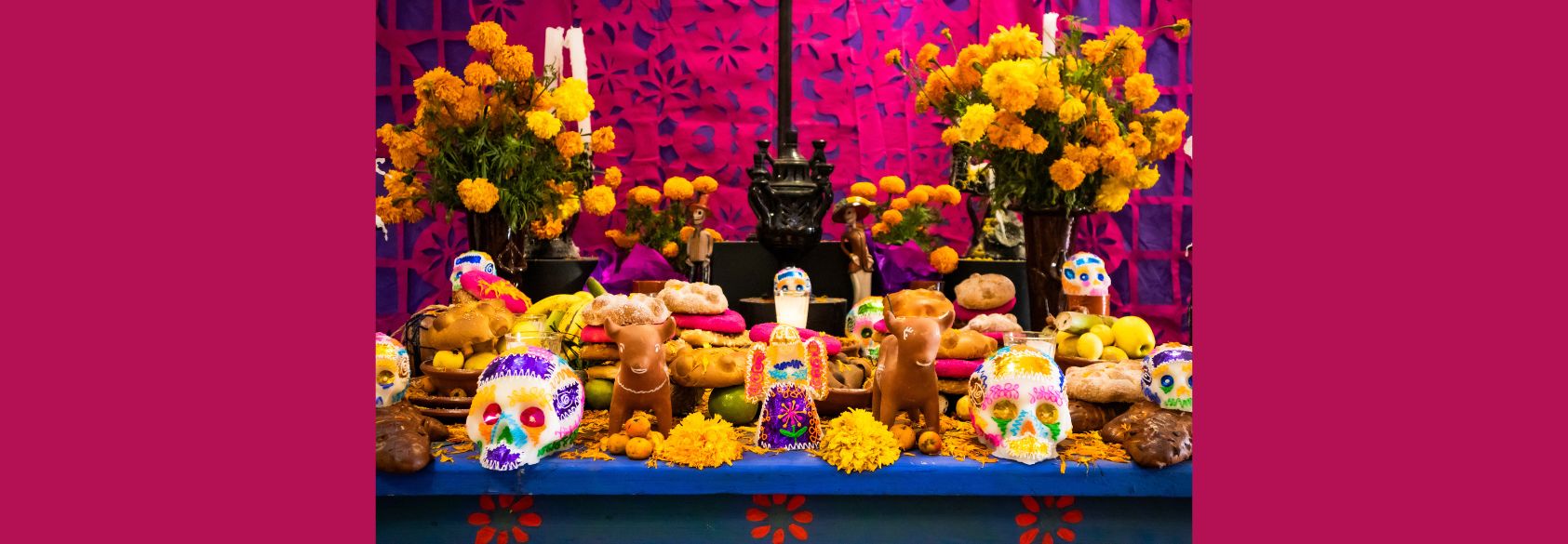
This traditional Día de los Muertos altar features marigolds, sugar skulls, pan de muerto, candles, and clay animals—symbols your students will explore through classroom activities and discussions.
Share
October 25, 2023
Explore Día de los Muertos in Mexico through videos and discussion questions, then compare how other communities remember loved ones who have died.
Share
Updated October 2026.
Bring Día de los Muertos into your middle or high school classroom with videos and questions about how people remember loved ones who have died. For more classroom ideas, explore Share My Lesson’s Día de los Muertos activities.
Día de los Muertos, or Day of the Dead, is a Mexican tradition for remembering loved ones who have died. Families may visit cemeteries or build ofrendas, altars with photographs, candles and favorite foods. The holiday has roots in Indigenous Mexican cultures and was later shaped by Catholic observances around All Saints’ Day and All Souls’ Day.
In the United States, Mexican American families and artists have celebrated Día de los Muertos for generations, and public celebrations have grown over time. Films like Coco and The Book of Life have introduced the holiday to wider audiences. A PBS NewsHour essay raises a useful question for students: What can a movie show about a living tradition, and what might it miss?
Students can use the guided questions and optional research activity to explore Día de los Muertos in Mexico alongside traditions in Guatemala, China, Ireland and a Japanese American community in Oregon. As they compare them, ask students to identify one meaningful connection and one important difference.
I know there isn’t time for all these videos in one class period, so I recommend starting with the Mexico overview video and two or three discussion questions. If you have more time, add a second video for comparison or save the group research activity for another day. I’ve included suggested start times for some videos to help you skip ahead.
Need to save a little more time? Use this three-step plan with the Mexico video and discussion questions below.
Explore how Día de los Muertos is celebrated in Mexico, from its Indigenous and Catholic influences to traditions such as ofrendas, cemetery visits, sugar skulls and pan de muerto. The videos also show how films like Coco and Spectre can shape how people see and celebrate the holiday.
Watch this clip from the movie “Coco” about Día de los Muertos.
Introduce students to China’s Hungry Ghost Festival, a tradition shaped by Buddhist and Taoist beliefs as well as local customs. Families and communities honor ancestors and care for wandering spirits through food offerings, burning incense and joss paper, and performances. To save time, start the video at 0:45.
In Sumpango, Guatemala, families and community groups mark All Saints’ Day on Nov. 1 with giant handmade kites, displayed or flown to honor and communicate with ancestors. This lesson introduces students to the giant-kite tradition and explores how the designs also carry messages about human rights, cultural survival and other issues. To save time, start the video at 2:20 and stop around 6:20, before the travel advice.
Many familiar Halloween customs in Ireland, including masks, carved turnip lanterns and leaving food for deceased relatives, are tied to Samhain, an ancient festival marking the start of winter. Students explore how remembrance, the harvest and hopes for protection shaped these traditions. To save time, start the video at 0:30.
Obon is a Japanese Buddhist tradition that honors the spirits of ancestors through music, dance, and gathering. In Portland, Oregon, Japanese Americans of all generations come together each summer to celebrate this festival, preserve cultural identity, and strengthen community ties.
Assign students to small groups. Each group will research one of the traditions covered in this lesson: Día de los Muertos (Mexico), the Hungry Ghost Festival (China), Barriletes Gigantes (Sumpango, Guatemala), Samhain (Ireland), or Obon (Portland’s Japanese American community). Ask groups to use the video and at least one reliable source, such as a museum, festival organizer or community organization.
Each group will prepare a short presentation that includes:
After the presentations, have students identify one meaningful similarity and one important difference among the traditions. Ask them to support each comparison with a detail from the videos or their research.
From Día de los Muertos in Mexico to Obon in Portland, communities remember people who have died through rituals shaped by their own histories and beliefs. As students look across the videos, ask them to notice what connects these traditions and what makes each one distinct.
Which detail from the videos stayed with your students? Invite them to discuss what it helped them understand. If you try this lesson, share what sparked conversation in your classroom in the comments below.


