. Skip to main content
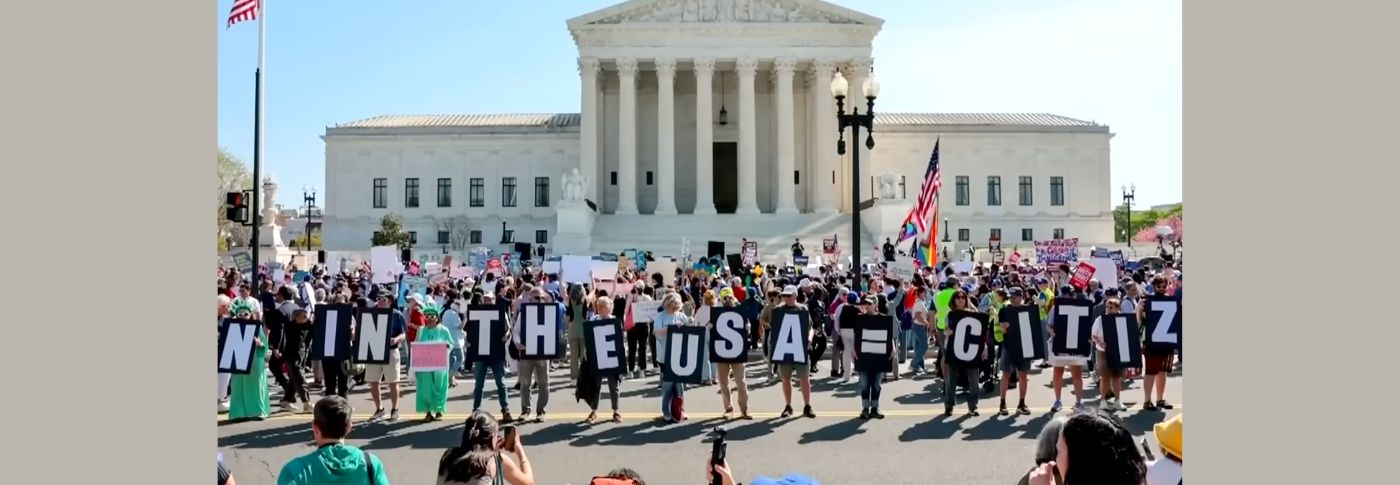
Protesters gather in front of the U.S. Supreme Court building in Washington, D.C., holding large signs spelling out "Born in the USA = Citizen" in support of birthright citizenship, ahead of the Court's ruling in Trump v. Barbara.

Protesters gather outside the U.S. Supreme Court in support of birthright citizenship. On June 30, 2026, the Court ruled 6-3 in Trump v. Barbara that children born in the United States to parents who are temporarily or unlawfully present are entitled to citizenship under the Fourteenth Amendment. Photo: PBS NewsHour

How the Birthright Citizenship Decision Impacts Trump's Immigration Agenda

July 2, 2026

How the Birthright Citizenship Decision Impacts Trump's Immigration Agenda

The Supreme Court just ruled 6-3 to uphold birthright citizenship under the 14th Amendment, dealing a major blow to one of Trump's signature immigration goals. Here is what the decision means, who it affects, and what comes next for the administration's agenda.

Share

Share On Facebook
Share On Twitter
Share On Pinterest
Share On LinkedIn
Email

On June 30, 2026, the U.S. Supreme Court ruled 6–3 that children born in the United States to parents who are temporarily or unlawfully present in the country are entitled to birthright citizenship under the Fourteenth Amendment, rejecting the Trump administration's narrower interpretation of the Citizenship Clause.

View the transcript of the story.

NOTE: If you are short on time, watch the video and complete this See, Think, Wonder activity: What did you notice? What did the story make you think? What would you want to learn more about? You can also make a Google doc copy of these general discussion questions.

Remote video URL

Warm-Up Questions

  1. Who wrote the majority opinion in this case?
  2. What is birth tourism?
  3. What was President Trump's argument regarding the Fourteenth Amendment?
  4. Why would legislation contradicting the U.S. Constitution be considered invalid?
  5. How will hundreds of thousands of newborn children be affected by this new ruling?

Essential Questions

  • What does Trump v. Barbara tell us about precedent? Do you think justices should always uphold precedent?
  • How can conflicts between the branches of government strengthen or challenge American democracy?
  • Media literacy: Supreme Court decisions are often complex and can be interpreted in different ways. Pay attention to the difference between what the Court actually ruled and how commentators, politicians or media outlets interpret the significance of those rulings. Where could you go to find out more from reliable sources about this case?

What Students Can Do

Watch this News Hour piece and working in pairs, have students note down these major components:

  • Majority opinion
    • Main argument
    • Constitutional reasoning
    • Evidence used
  • Dissenting opinion
    • Main argument
    • Constitutional reasoning
    • Evidence used

Have students write a two-paragraph response on which argument they find more persuasive and why.

Remote video URL

The Supreme Court: Balancing the Branches Lesson Plans

Explore free, classroom-ready lessons on the Supreme Court, the Constitution, and the balance of power among the three branches. From landmark cases to today's biggest civic debates, Share My Lesson helps students build the background knowledge and critical-thinking skills to understand how government really works.

Republished with permission from PBS News Hour Classroom.

PBS News Hour Classroom
PBS News Hour Classroom helps teachers and students identify the who, what, where and why-it-matters of the major national and international news stories. The site combines the best of News Hour's reliable, trustworthy news program with lesson plans developed specifically for... See More
Advertisement

Post a comment

Log in or sign up to post a comment.