. Skip to main content
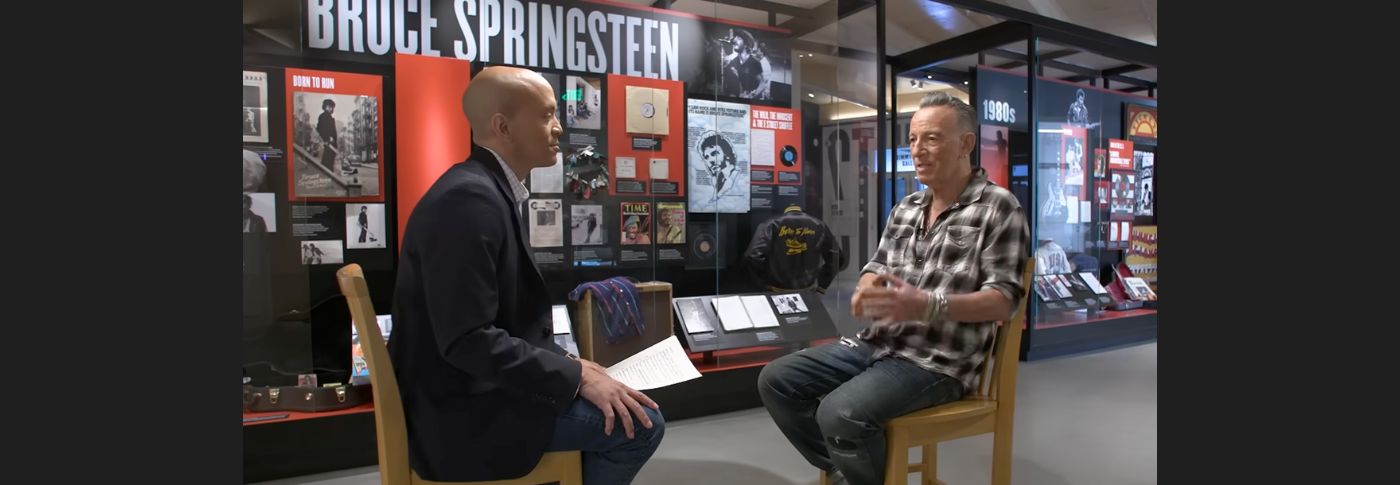
PBS NewsHour correspondent Geoff Bennett sits down with Bruce Springsteen inside the Bruce Springsteen Center for American Music at Monmouth University, surrounded by exhibits of Springsteen memorabilia.

PBS NewsHour correspondent Geoff Bennett sits down with Bruce Springsteen at the Bruce Springsteen Center for American Music at Monmouth University. Springsteen discussed what he calls "critical patriotism," the idea that loving your country means telling the truth about it, and how he uses protest music to engage with the political moment. Photo: PBS NewsHour

Bruce Springsteen on 'Critical Patriotism' and the Power of Protest Music

June 30, 2026

Bruce Springsteen on 'Critical Patriotism' and the Power of Protest Music

Bruce Springsteen has spent decades writing songs that wrestle with what it means to love America while holding it accountable. He sat down with PBS NewsHour to talk about his new museum, his latest protest song, and why he calls it "critical patriotism."

Share

Share On Facebook
Share On Twitter
Share On Pinterest
Share On LinkedIn
Email

The Bruce Springsteen Center for American Music at Monmouth University features exhibits dedicated to one of New Jersey’s most famous sons while also exploring the broader story of American music. Geoff Bennett met with "The Boss" to discuss the center, his musical legacy, and how the outspoken artist is approaching this moment in civic life. It’s part of our arts and culture series, CANVAS.

View the transcript of the story.

NOTE: If you are short on time, watch the video and complete this See, Think, Wonder activity: What did you notice? What did the story make you think? What do you want to learn more about? You can also make a Google doc copy of these general discussion questions.

Remote video URL

Warm-Up Questions

  1. Who is Bruce Springsteen?
  2. What is the purpose of the Bruce Springsteen Center for American Music?
  3. Where did the museum get its collection of Springsteen memorabilia?
  4. When and why did Springsteen write his song "Streets of Minneapolis"?
  5. How can protest music be an effective mode of political mobilization?

Essential Questions

  1. What is "critical patriotism"? Do you agree with Springsteen's belief that loving your country means telling the truth about it? Explain.
  2. Why do you think Springsteen wants to be a "link in the longer chain" of American culture? How can music be used to understand the history of a nation?
  3. Media literacy: Notice how the News Hour host briefly explained the political messaging behind the excerpts of Springsteen's songs that were played. Was this helpful or would you have preferred to take in and analyze the music yourself? Explain.

What Students Can Do

A. Take some time to watch Bruce Springsteen and the E Street Band's live performance of Streets of Minneapolis (Live From Minneapolis) with your family or friends.

Remote video URL

Together, answer the following questions:

  1. Do you think this song is patriotic? Why or why not?
  2. Can protest art lead to actual policy change? Explain.
  3. What, if anything, will people who watch this performance in 50 years learn about the times we are living through?

B. If you feel strongly about this topic, contact your federal representatives (U.S. House of Representatives and U.S. Senate) to ask any questions or share any opinions about immigration enforcement policy. Use this website to find out who represents you in Congress and how to contact them.

Subscribe to Our Newsletter

Want to see more stories like this one? Subscribe to the SML e-newsletter!

Republished with permission from PBS News Hour Classroom.

PBS News Hour Classroom
PBS News Hour Classroom helps teachers and students identify the who, what, where and why-it-matters of the major national and international news stories. The site combines the best of News Hour's reliable, trustworthy news program with lesson plans developed specifically for... See More
Advertisement

Post a comment

Log in or sign up to post a comment.