. Skip to main content
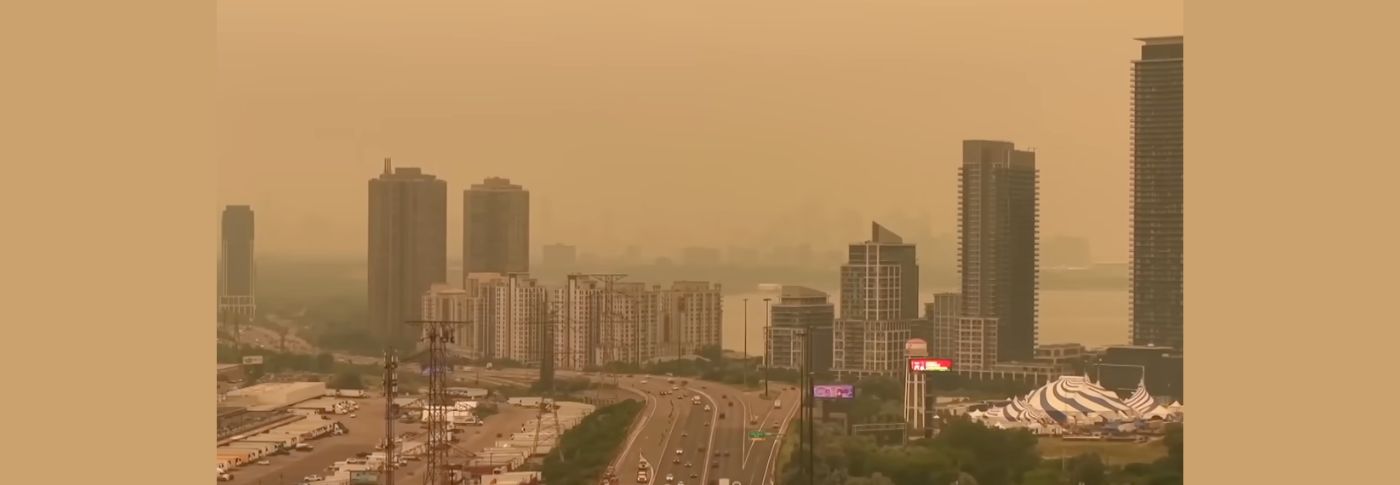
Hazy orange-brown wildfire smoke blankets a city skyline of high-rises above a waterfront and highway.

Wildfire smoke casts a thick orange haze over a city skyline, reducing visibility across the downtown core and waterfront. Photo: PBS NewsHour

The Health Risks of Wildfire Smoke Across the Midwest and Mid-Atlantic

July 21, 2026

The Health Risks of Wildfire Smoke Across the Midwest and Mid-Atlantic

More than 115 million people faced dangerous air as wildfire smoke spread across 17 states. This lesson helps students explore the health risks, the climate connection, and how communities respond.

Share

Share On Facebook
Share On Twitter
Share On Pinterest
Share On LinkedIn
Email

More than 115 million people may be exposed to dangerous smoke and unhealthy air quality levels. That's because wildfire smoke is spreading and triggering health advisories in at least 17 states from the Midwest to the Mid-Atlantic. It's led to flight delays, the closure of pools and beaches and the cancellation of many other outdoor activities.

View the transcript of the story.

NOTE: If you are short on time, watch the video and complete this See, Think, Wonder activity: What did you notice? What did the story make you think about? What would you want to learn more about?

Remote video URL

Warm-Up Questions

  1. Who is most at-risk from the smoke’s effects?
  2. Where are the states that have put out health advisories?
  3. What are the symptoms that people can experience from exposure to smoke?
  4. What was the cause of many of the wildfires, and how are weather patterns impacting smoke?
  5. How dangerous is smoke exposure in the short and long-term?

Essential Questions

  1. In the video, Professor Mike Flannigan discusses how climate change has affected the severity and volume of wildfires. With some of these wildfires caused by lightning or other natural causes, what does it say that human activity is making their impact worse?
  2. What does the video suggest for mitigating the impact of smoke? Are these strategies feasible for everyone?
  3. Media literacy: The images of smoke-filled cities shown in the video are powerful, as they sharply contrast with how these skylines usually look. Yet, the interviews with people living in these places along with experts offer a different, more human look at how wildfires impact everyday life. What stood out regarding these interviews and the stories of those who were interviewed?

What Students Can Do

Explore the interactive AirNow page from the Interagency Wildland Fire Air Quality Response Program (IWFAQRP) under the US Department of Agriculture (USDA) Forest Service. Look through the map at the various regions, then click on the AirNow and IWFAQRP icons on the top left. They have more information regarding wildfires and preparedness, and students should explore each page and then discuss the following:

  • What tools do the IWFAQRP and USDA use to monitor wildfire activity and danger? How do these tools allow these agencies to model wildfire activity and create understandable maps for the public?
  • With climate change being identified as such a strong factor in why wildfires are becoming more intense, does this help to create more urgency around environmental impact reform? Is personal impact important to realize the scale of an issue, and how can this event contribute to creating a greater narrative around climate change action?

Lesson Plans on Climate Change

Explore more resources for educators to find a wide-range of relevant preK-12 lessons on climate change or supporting young people as they continue to lead the conversation around the climate change crisis.

Republished with permission from PBS News Hour Classroom.

PBS News Hour Classroom
PBS News Hour Classroom helps teachers and students identify the who, what, where and why-it-matters of the major national and international news stories. The site combines the best of News Hour's reliable, trustworthy news program with lesson plans developed specifically for... See More
Advertisement

Post a comment

Log in or sign up to post a comment.