


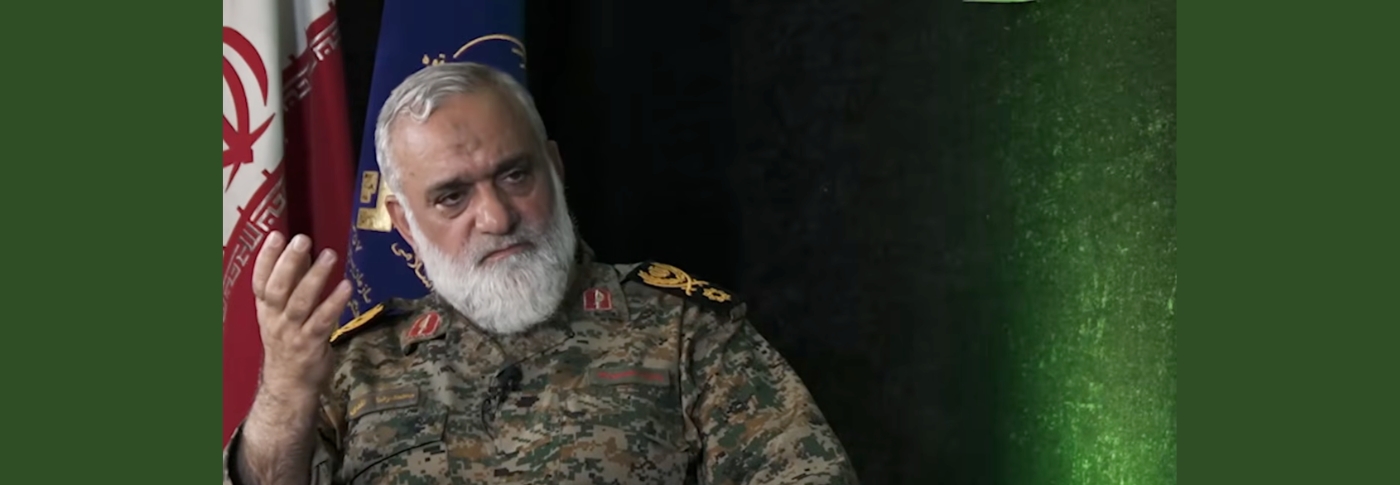

As the war on Iran continues its uneasy stalemate, we're hearing from a top adviser to the commander of Iran's Islamic Revolutionary Guard Corps, the force largely responsible for border and internal security. Brig. Gen. Mohammad Reza Naqdi sat down in Tehran for an exclusive interview with special correspondent Reza Sayah.
View the transcript of the story.
Short on time? Watch the video and complete the following See, Think, Wonder questions: What did you notice? What did the story make you think? What would you want to learn more about?
Warm-Up Questions
- Who is Mohammad Reza Naqdi?
- Where and when did the interview take place?
- How did Naqdi respond to the reporter's question about Iran attacking non-military ships attempting to cross the Strait of Hormuz?
- What examples did Naqdi give to support his statement that Defense Secretary Pete Hegseth and members of the Trump administration and Trump's family are criminals?
- Why does Naqdi see the Israel-Palestine conflict as problematic to events related to the Iran War?
Essential Questions
- Naqdi says Iran is clearly winning the war. Do you agree? Explain. If you're not sure how to respond, how could you find out about the events that have taken place since the U.S. and Israel first attacked Iran on Feb. 28, 2026?
- If Iran had a nuclear weapon, do you think that would have acted as a deterrent to the U.S. and Israel's decision to attack Iran? Explain.
- Media literacy: How did Naqdi react to the reporter's question about how rare it is ("long-running policy" not to grant interviews) for the IGRC to give interviews to western media outlets? How could you verify this?
What Students Can Do
Read the article, "The End of Nuclear Diplomacy" by Ray Takeyh, and watch the short video featuring him by the Council on Foreign Relations (CFR).
- Why does Takeyh say the bombing of Iran's nuclear facilities on June 13, 2025, and the killing of senior officials "ended the era of diplomatic counterproliferation?" First, what does counterproliferation mean? Second, what are the implications of nuclear diplomacy ending?
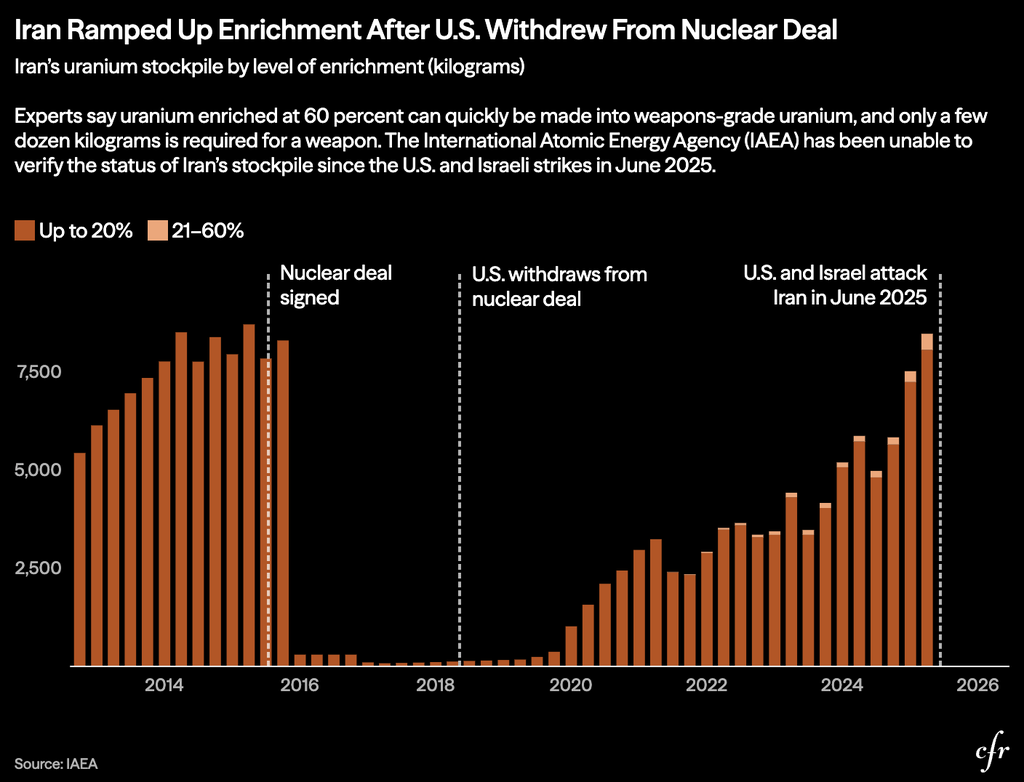
Take a look at the graph from the CFR article below.
- What happened after the U.S. withdrew from the 2015 Joint Comprehensive Plan of Action (JCPOA), which was negotiated by the Obama administration? According to Takeyh, "The JCPOA—with its cascade of sunset clauses and permissive approach to sanctions relief—lacked a durable domestic constituency. President Donald Trump tore it up in 2018, and President Joe Biden did not put it back together again." What does Takeyh mean that the JCPOA "lacked a durable domestic constituency"? Why is the problematic?
Lesson Plans on Global Politics
Find more resources on global politics and how they relate to your students with our free collection of preK-12 lesson plans and teaching resources.
Republished with permission from PBS News Hour Classroom.

PBS News Hour Classroom helps teachers and students identify the who, what, where and why-it-matters of the major national and international news stories. The site combines the best of News Hour's reliable, trustworthy news program with lesson plans developed specifically for... See More
Advertisement


