
. Skip to main content
Rows of blue injectable drug pens move along an automated pharmaceutical manufacturing line, representing the production of GLP-1 weight loss medications like Ozempic and Wegovy. Photo: Getty Images.

Injectable GLP-1 weight loss medications move along a pharmaceutical manufacturing line. A new policy change will allow certain low-income Medicare beneficiaries to access GLP-1 drugs like Ozempic and Wegovy at significantly reduced prices through the federal Extra Help program, expanding access to treatments that can cost more than $1,000 per month.

Some Medicare Beneficiaries Eligible for Weight Loss Drug Discounts

July 13, 2026

Some Medicare Beneficiaries Eligible for Weight Loss Drug Discounts

GLP-1 weight loss drugs like Ozempic can cost more than $1,000 a month. Now, a new policy change means some low-income Medicare beneficiaries may be able to get them for as little as $11. Here is who qualifies and what it means for health equity.

Share

Share On Facebook
Share On Twitter
Share On Pinterest
Share On LinkedIn
Email

The number of Americans taking a GLP-1 drug for weight loss is on the rise. A new Gallup poll shows 11% of adults say they are currently using one, a dramatic increase from just two years ago when just 3% said they were using them. That number could climb even higher as Medicare has cleared the way for some patients to access the drugs.

View the transcript of the story.

NOTE: If you are short on time, watch the video and complete this See, Think, Wonder activity: What did you notice? What did the story make you think about? What would you want to learn more about?

Remote video URL

Warm-Up Questions

  1. What are GLP-1s, and what conditions are they used to treat?
  2. Who had previously qualified for Medicare coverage of GLP-1s?
  3. When does the government’s subsidy program expire?
  4. What concerns have been raised with elderly people in particular taking GLP-1s?
  5. How is the coverage of GLP-1s in the short-term expected to produce longer-term cost-savings?

Essential Questions

  1. According to the Cleveland Clinic, GLP-1s are: “a class of medications that mainly help manage blood sugar (glucose) levels in people with Type 2 diabetes”. Is this how these drugs are mainly advertised? Why do you think they are described this way?
  2. The video notes that this program, while welcomed by many, only lasts for a year. What concerns are cited for people that may lose coverage when using these drugs to manage their diabetes or weight?
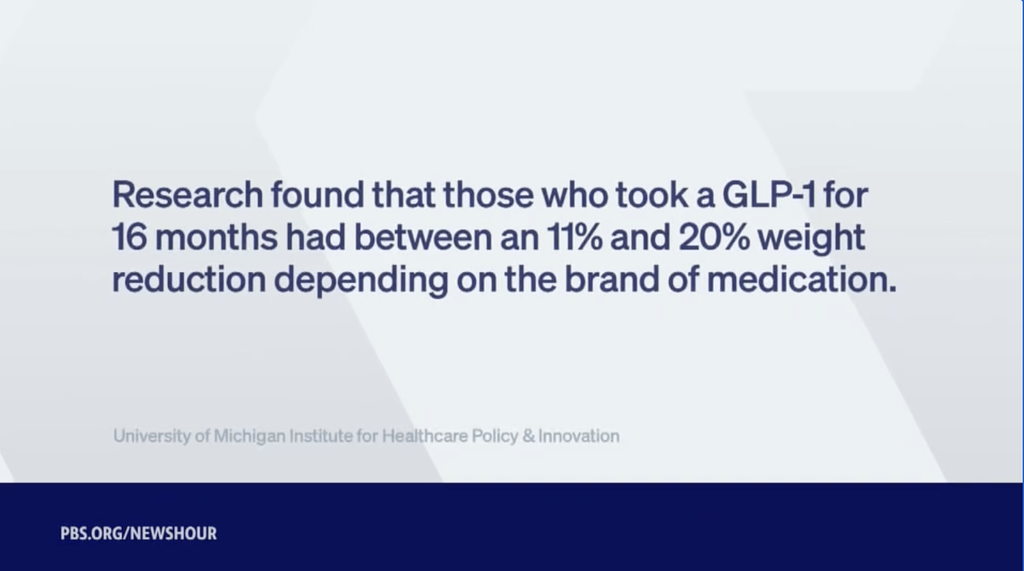
  3. Media literacy: Look over this statistic from the University of Michigan Institute for Healthcare Policy & Innovation. After reading, answer the following questions:

PBS NewsHour infographic citing the University of Michigan Institute for Healthcare Policy and Innovation: research found that those who took a GLP-1 for 16 months had between an 11% and 20% weight reduction depending on the brand of medication.

What does it mean to have such a wide range of weight reductions seen? What challenges does this present as more brands develop their own varieties for an increasingly interested number of consumers? How would these challenges potentially affect both cost of and access to GLP-1s?

What Students Can Do

Much of the discussion around GLP-1s centers around access and affordability. While these are important concerns for patients, the science behind the drug came from an unexpected place and is worth exploring. Students can visit this page from the UK Natural History Museum and learn more about the Gila Monster and its role in the development of GLP-1s. Read through the page and on its other examples of how venom is being used to study medicine effects. After students are done, they should discuss the page and how important it is for scientists to look in all places when they encounter challenges. Some guiding questions can be:

  • Consider the story of the Gila Monster and its venom, then that the research that allowed GLP-1s to be developed is facing major funding risks. How important is it to learn about the entire development process of a drug versus just its potential and effects?
  • The video mentions side effects for specific patient groups when taking GLP-1s. How important is it to understand the risks and development of a specific medicine alongside its potential benefits? Could more attention to drug development affect people’s attitudes towards them?
  • Does framing the development of GLP-1s around “venom” possibly increase the likelihood that consumers would take risks more seriously?

To explore more about how looking to nature can help with innovation, check out PBS News Hour Classroom's Invention Education series with lessons ranging from biomimicry to solving environmental challenges.

Vital Lessons: Health Chats with Dr. Vin Gupta

Join Dr. Vin Gupta—pulmonologist, public health expert, and professor—for a yearlong series offering expert-led webinars, blogs, resources, and Q&A sessions on pressing health issues to help AFT members and communities stay informed and healthy. Access all on-demand town halls and register for the next one.

Republished with permission from PBS News Hour Classroom.

PBS News Hour Classroom
PBS News Hour Classroom helps teachers and students identify the who, what, where and why-it-matters of the major national and international news stories. The site combines the best of News Hour's reliable, trustworthy news program with lesson plans developed specifically for... See More
Advertisement

Post a comment

Log in or sign up to post a comment.