. Skip to main content
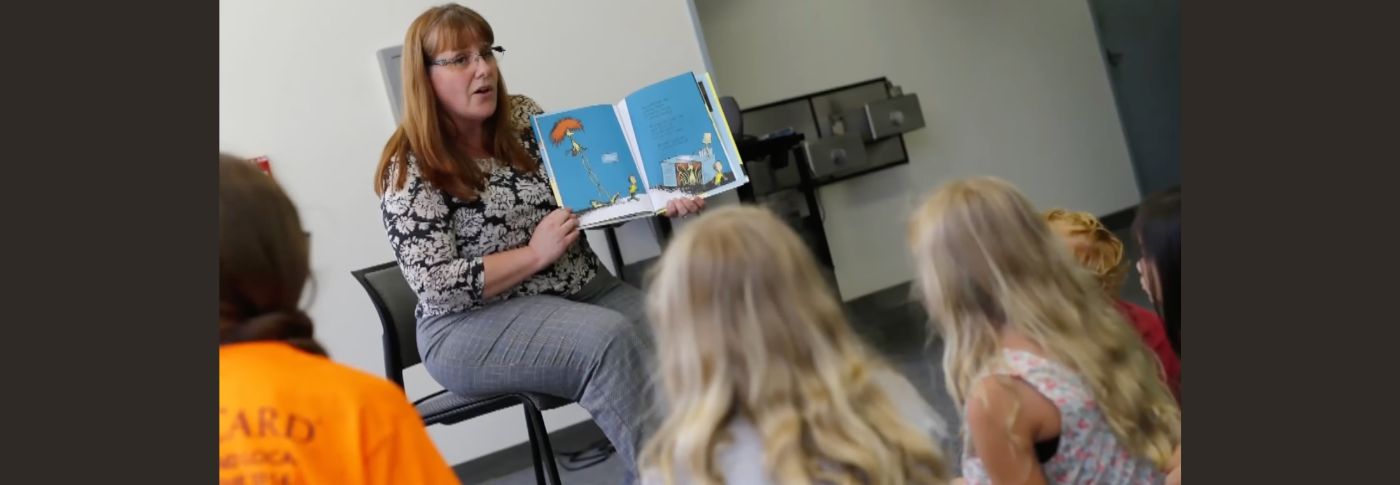
A woman with red hair and glasses reads a colorful illustrated picture book aloud to a group of young children seated in front of her in a classroom or library setting.

A teacher reads aloud to young students. A new cover story in The Atlantic warns that America may be entering a post-literate age, as the share of Americans who read for pleasure has declined sharply across all age groups, driven in part by social media and shortened attention spans. Photo: PBS NewsHour

'Post-Literate Age': Why Fewer Americans Are Reading for Pleasure

July 20, 2026

'Post-Literate Age': Why Fewer Americans Are Reading for Pleasure

Americans are reading more words than ever, but fewer books. A new Atlantic cover story says we may be entering a post-literate age, and the effects are showing up in classrooms across the country. Here is what the data shows and what educators can do about it.

Share

Share On Facebook
Share On Twitter
Share On Pinterest
Share On LinkedIn
Email

In recent years, there has been attention and worries about how reading has changed among kids. Those concerns include the nature of what kids are reading and how many fewer books are part of their education diet. A new cover story in The Atlantic is casting a broader spotlight, raising similar questions for the overall population. Jeffrey Brown discussed more with The Atlantic's Rose Horowitch.

View the transcript of the story.

NOTE: If you are short on time, watch the video and complete this See, Think, Wonder activity: What did you notice? What did the story make you think about? What would you want to learn more about?

Remote video URL

Warm-Up Questions

  1. Who is Rose Horowitch, and what is her background?
  2. What do the statistics presented reveal about American reading habits and how they've changed over time?
  3. Why are we reading more words than ever, despite reading for pleasure decreasing, according to Horowitch?
  4. Where does Rose Horowitch say we are entering as the period of reading comes to an end?
  5. How does social media play a role in restricting individuals from challenging themselves with complex works of literature, according to Horowitch?

Essential Questions

  1. Why do you think fewer Americans are reading for pleasure?
  2. Can you think of any way to encourage more Americans to read for pleasure? Do you think such an effort would be worthwhile? Why or why not?
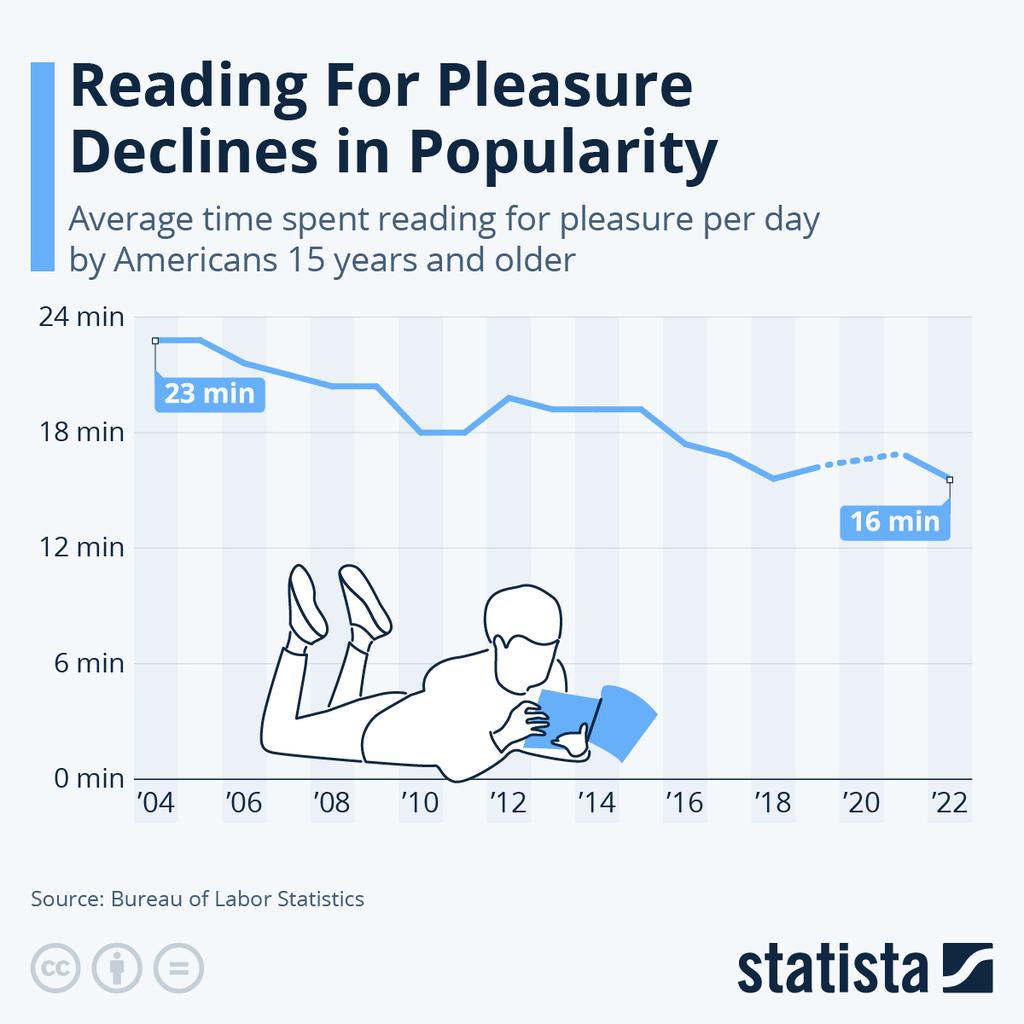
  3. Media literacy: Take time to analyze the following graph.
    • What data stands out to you?
    • Why do you believe that Americans are beginning to read less as they get older?
    • How does technology play a role in shifting reading patterns?

A Statista line chart titled "Reading For Pleasure Declines in Popularity" showing that the average time Americans 15 and older spent reading for pleasure per day dropped from 23 minutes in 2004 to 16 minutes in 2022. Source: Bureau of Labor Statistics.

What Students Can Do

How much do you read for pleasure? Track your own reading habits.

  • First, ask yourself: How many books have I read this year for pleasure, not related to school?
  • Are there any books that you've intended to read but just haven't got around to yet? Why do you think you haven't been able to make time?
  • If you were to pick up a book to read for pleasure, what could it be? To decide, you might take time to jot down your favorite genres of movies or TV shows that you liked to watch. Once done, use said genres to then research books that fall under the same umbrella as your favorite shows/movies.

The Internet Archives are an excellent way to find millions of books that are completely free to read.

Once you have found your choice of book, take time to read the first chapter. Afterward, share with your friends your experience and what you learned.

Subscribe to Our Newsletter

Want to see more stories like this one? Subscribe to the SML e-newsletter!

Republished with permission from PBS News Hour Classroom.

PBS News Hour Classroom
PBS News Hour Classroom helps teachers and students identify the who, what, where and why-it-matters of the major national and international news stories. The site combines the best of News Hour's reliable, trustworthy news program with lesson plans developed specifically for... See More
Advertisement

Post a comment

Log in or sign up to post a comment.