. Skip to main content
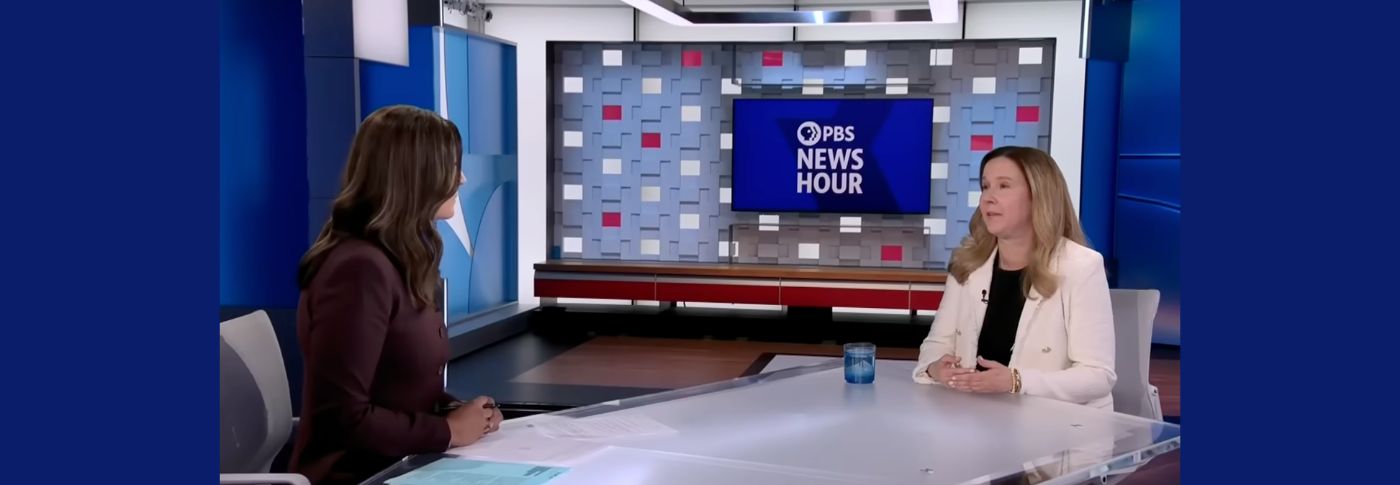
PBS NewsHour anchor Amna Nawaz interviews SCOTUSblog co-founder and Supreme Court analyst Amy Howe at the PBS NewsHour studio desk, with the PBS NewsHour logo visible on a screen behind them.

PBS NewsHour anchor Amna Nawaz speaks with SCOTUSblog co-founder and Supreme Court analyst Amy Howe about two major Supreme Court rulings issued on June 30, 2026. The decisions significantly expand presidential power, allowing President Trump to fire leaders of independent federal agencies while carving out a narrow protection for the Federal Reserve. Photo: PBS NewsHour

How Two Supreme Court Rulings Are Reshaping Presidential Power in 2026

July 1, 2026

How Two Supreme Court Rulings Are Reshaping Presidential Power in 2026

The Supreme Court just handed President Trump two major victories that could fundamentally reshape who controls the federal government. Here is what the rulings in Trump v. Slaughter and Trump v. Cook mean for separation of powers and what students need to know.

Share

Share On Facebook
Share On Twitter
Share On Pinterest
Share On LinkedIn
Email

The U.S. Supreme Court issued two major rulings on Monday that significantly expand presidential power and President Trump's attempt to further reshape the federal government.

View the transcript of the story.

NOTE: If you are short on time, watch the video and complete this See, Think, Wonder activity: What did you notice? What did the story make you think? What would you want to learn more about? You can also make a Google doc copy of these general discussion questions.

Remote video URL

Warm-Up Questions

  1. What previous case did Trump v. Slaughter overturn?
  2. Who is Lisa Cook?
  3. What was the majority's argument in favor of Lisa Cook?
  4. Where did Rebecca Slaughter previously work?
  5. How does Trump v. Slaughter contradict the way in which Congress had previously decided independent agencies should function?

Essential Questions

  • How do these Supreme Court decisions on executive power change the balance of power in the federal government?
  • What are the advantages and disadvantages of giving presidents greater control over the executive branch?
  • Media literacy: Supreme Court decisions are often complex and can be interpreted in different ways. Pay attention to the difference between what the Court actually ruled and how commentators, politicians or media outlets interpret the significance of those rulings.

What Students Can Do

Read this News Hour piece and choose one of the two Supreme Court rulings to focus on — the decision protecting the Federal Reserve's independence (Trump v. Cook) or the decision expanding the president's authority to remove leaders of independent agencies (Trump v. Slaughter).

Research the constitutional arguments on both sides of the case using the following links: Trump v. Cook & Trump v. Slaughter. Then, write a one-page brief explaining:

  • What question was the Supreme Court trying to answer?
  • What reasoning did the majority use?
  • What concerns did the dissent or critics raise?
  • Do you agree with the Supreme Court's reasoning? Why or why not?

The Supreme Court: Balancing the Branches Lesson Plans

Explore free, classroom-ready lessons on the Supreme Court, the Constitution, and the balance of power among the three branches. From landmark cases to today's biggest civic debates, Share My Lesson helps students build the background knowledge and critical-thinking skills to understand how government really works.

Republished with permission from PBS News Hour Classroom.

PBS News Hour Classroom
PBS News Hour Classroom helps teachers and students identify the who, what, where and why-it-matters of the major national and international news stories. The site combines the best of News Hour's reliable, trustworthy news program with lesson plans developed specifically for... See More
Advertisement

Post a comment

Log in or sign up to post a comment.