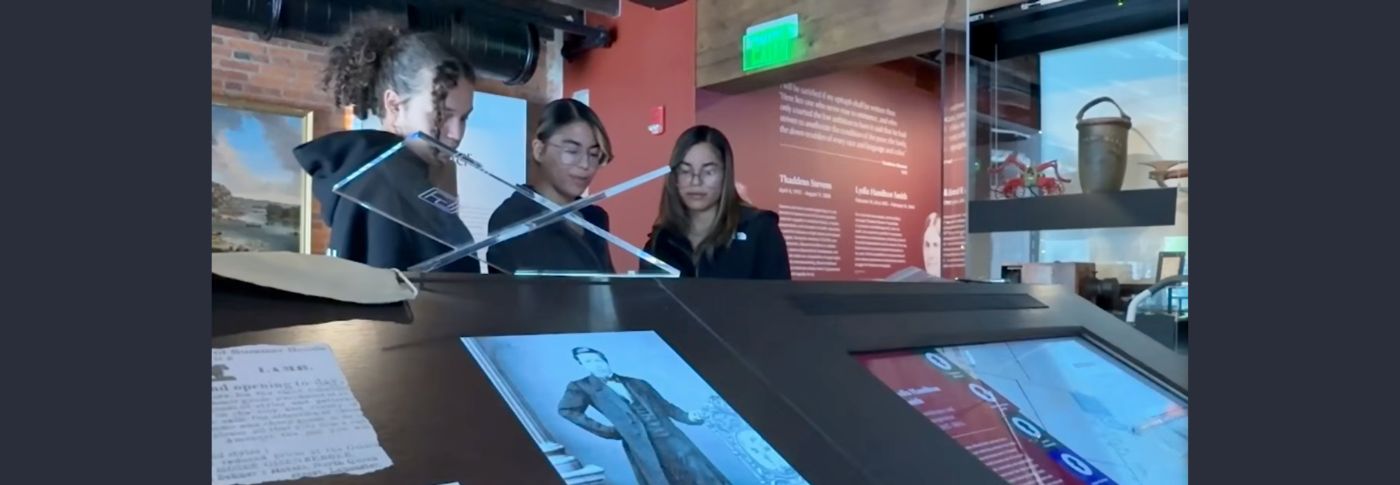
Students explore exhibits at the Thaddeus Stevens and Lydia Hamilton Smith Center in Lancaster, Pennsylvania. Stevens was a fierce abolitionist and advocate for racial equality whose life and legacy are now celebrated at the new museum, which equally honors both Stevens and his housekeeper and business partner, Lydia Hamilton Smith. Photo: PBS NewsHour
New Museum Spotlights Thaddeus Stevens' Abolitionist Legacy
Most Americans have never heard of Thaddeus Stevens, yet he helped write the 13th and 14th Amendments. A new museum in Pennsylvania is changing that, and student reporters went to find out why his story still matters today.
Civil War-era Congressman Thaddeus Stevens was a fierce abolitionist and advocate for racial equality. His life and legacy are now being celebrated in a new museum in Lancaster, Pennsylvania. Liz McKenna of our journalism training program, PBS News Student Reporting Labs, has the story.
NOTE: If you are short on time, watch the video and complete this See, Think, Wonder activity: What did you notice? What did the story make you think about? What would you want to learn more about?
Remote video URL
Warm-Up Questions
What amendments did Thaddeus play a pivotal role in crafting?
Where is the new museum located? Why is that location significant?
Who was Lydia Hamilton Smith?
How did Smith break social barriers, and what are some of her biggest accomplishments?
Why is the Fourteenth Amendment considered the foundation of the modern civil rights movement, according to Robin Sarratt?
Essential Questions
Both high school students interviewed in this segment, Hasset Tesfaye-Desalgn and Hana Rebek, noted how the museum emphasizes the importance of speaking out, with Rebek stating that visitors "can look at examples like in this museum and know that they're capable of doing that too." What do you believe enables museums to inspire activism rather than just inform?
Student reporter Liz McKenna explains that "more than 150 years after the Fourteenth Amendment was ratified, the Trump administration is now attempting to overturn its guarantee of universal birthright citizenship in a case before the Supreme Court." How does learning about the history of the amendment's passage inform how we think about current-day issues surrounding it?
Media literacy: In the segment, Liz McKenna shares that Thaddeus Stevens was largely forgotten by the public until he was brought back to life in Steven Spielberg's 2012 movie "Lincoln." (You can watch the full clip shown in the segment here)
Why do you think figures like Thaddeus Stevens and Lydia Hamilton Smith are often overlooked, or entirely left out, of mainstream historical narratives?
What role does film media play in our understanding of history? Does it help clarify or obscure the truth? Explain.
What Students Can Do
Explore the Thaddeus Stevens & Lydia Hamilton Smith Center's website. Examine a brief history of Stevens, Smith and Lancaster linked here and answer the following:
Why did Lancaster's location make it "a place of both refuge and resistance"?
What was the Christiana Resistance of 1851?
Next, explore its galleries linked here, and answer the following:
Which gallery would you want to visit most? Explain.
Why do you think the museum decided to equally honor both Stevens and Smith, rather than centering one over the other?
News: Then & Now
The News: Then & Now section of the Daily News Lessons allows students to see connections between current and past news events. The activity provides historical context using primary sources from the Library of Congress.
See PBS News Hour Classroom's Journalism in Action website for interactive examples of how journalists covered key events in U.S. history while honing your primary source, civics and digital news literacy skills.
Then
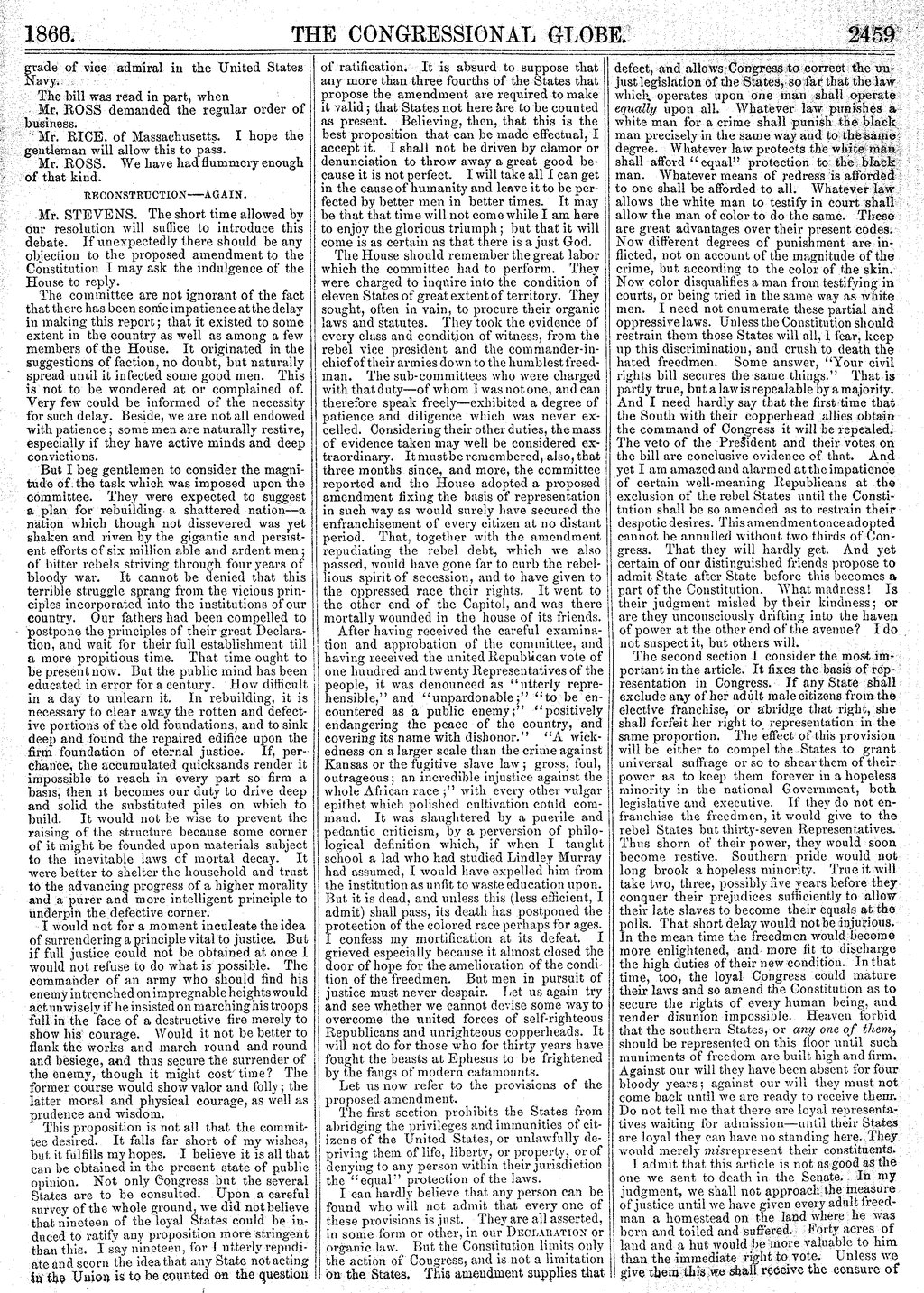
On May 8, 1966, Thaddeus Stevens delivered a speech introducing the Fourteenth Amendment in the U.S. House of Representatives. Stevens served on the Joint Committee on Reconstruction and chaired the powerful House Ways and Means Committee. In this speech, Stevens calls on his colleagues to support the proposed Fourteenth Amendment, while also remembering the crimes of the Confederacy.
You can read an excerpt of the speech on the Constitution Center website, as well as a summarized version of the excerpt here.
While reading, consider the following questions:
How does the proposed first section of the amendment allow Congress to correct the unjust legislation of the States, according to Stevens?
What examples does Stevens give for how the law would be applied equally regardless of race?
Why does Stevens believe the proposed second section is the most important? How does it incentivize Southern states to grant universal suffrage?
Now
As student reporter Liz McKenna has alluded to in the segment, debate has arisen in response to theTrump administration's attempt to overturn universal birthright citizenship, guaranteed by the first section of the Fourteenth Amendment.
On March 10, the Senate Judiciary Committee on the Constitution heard testimony on birthright citizenship ahead of the Supreme Court case (for more information on the Supreme Court case itself, check out PBS New Hour Classroom's Daily News Lesson "Supreme Court hears arguments about birthright citizenship")
You can watch the recording of the full clip of the hearing on C-Span, linked here. Watch the first 13 minutes, featuring statements by Subcommittee chair Senator Eric Schmitt (R-MO) and ranking member Senator Peter Welch (D-VT)
While watching, keep in mind: what are the similarities and differences in the arguments by Senators Schmitt and Welch?
Discussion Questions
How has the debate surrounding the Fourteenth Amendment changed or remained the same from when it was first proposed to today?
What pertinent issues surrounded the amendment's passage, and what issues surround the current debate around birthright citizenship? How are they similar and different?
Subscribe to Our Newsletter
Want to see more stories like this one? Subscribe to the SML e-newsletter!
PBS News Hour Classroom helps teachers and students identify the who, what, where and why-it-matters of the major national and international news stories. The site combines the best of News Hour's reliable, trustworthy news program with lesson plans developed specifically for... See More