Beyond Behavior: Trauma-Informed Teaching Builds Connection
How the AFT's CARE-FULL training inspired one educator to examine her assumptions, recognize student resilience and transform her practice.

Share
November 19, 2026
How the AFT's CARE-FULL training inspired one educator to examine her assumptions, recognize student resilience and transform her practice.
Share
Participants in the AFT’s professional learning on trauma-informed practices, “CARE-FULL: Skills for School Staff to Promote Student Resilience and Prevent Trauma,” submit assignments that call on them to reflect on their understanding and apply course concepts. In the fall 2026 semester, the first assignment asked participants to:
In this reflection from the AFT’s CARE-FULL professional learning course, Dr. Juanita I. Johnson explores how trauma-informed teaching can help educators look beyond student behavior, examine their assumptions and build connection through an asset-based approach. Dr. Johnson’s reflection is vulnerable, heartfelt and full of incredible connections to multiple course concepts. I’m honored to share her work as an example of the kinds of insights that can emerge with CARE-FULL.
- Chelsea Prax, AFT Children’s Health & Well-Being
What happens when the behaviors that challenge us most become invitations to examine ourselves?
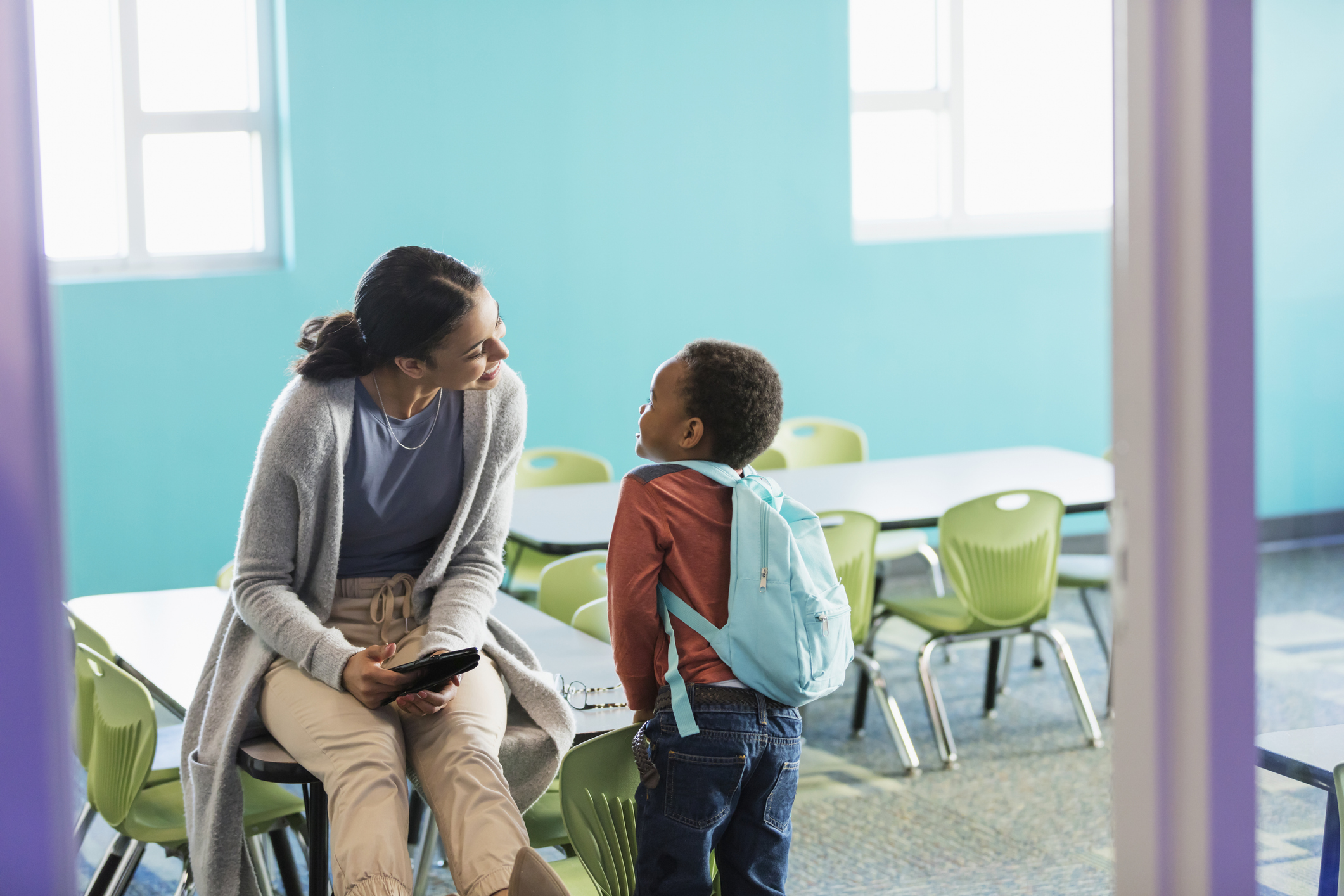
This course has invited me to reflect on a composite portrait of several bright, effervescent, energetic and precocious young learners whom I've had the privilege of teaching. Each of these 5- to 6-year-old learners brings a unique constellation of strengths, experiences and challenges into our shared learning environment. They are curious, expressive, imaginative and eager to engage, yet they sometimes struggle to navigate group expectations, regulate impulses, follow directions or manage frustration without additional guidance and support. Their behaviors can be disruptive, their needs complex and their responses perplexing. Yet beneath these challenges are children whose brilliance, resilience and desire for connection invite me to look beyond what I see and question what I think I know.
Every child enters our classroom carrying a story, much of which remains unseen. Yet, as a teacher, my responsibility is to cultivate the genius within through support and belief. As a Montessori teacher, I sometimes have the gift of more than one year with students who join my classroom for a three-year cycle. This has afforded me the opportunity to build both relationships and trust with my students and their families. As a result, I have learned details of their stories that merit my attention and understanding. They have endured a myriad of traumatic circumstances, including difficult birth stories, intermittent episodes of domestic violence, familial mental illness, parental incarceration, substance abuse, divorce or co-parenting that has resulted in parental separation, and sometimes their own misunderstood neurodivergence.
Based on this information, I could reasonably conclude that their events, exposures and environment have included multiple adverse childhood experiences. However, this course, “CARE-FULL: Skills for School Staff to Promote Student Resilience and Prevent Trauma,” is equipping me as an educator with more knowledge and practical skills to recognize and respond to trauma, prevent harm, foster resilience and promote healing among my students. Trauma-informed teaching asks educators to look beyond behavior, avoid assumptions and respond with connection, predictability and support.

Additionally, this content is helping me differentiate my observations from the interpretations this knowledge would otherwise necessitate. You see, despite the many odds stacked against my students according to the Adverse Childhood Experiences (ACEs) questionnaire and the resulting common traumatic experiences that I have both discerned and witnessed over our three shared years (including sadness, grief, periodic anxiety, trouble concentrating and feeling out of control), their resilience shines brightly and offers resounding hope for a promising future if their strengths are properly stewarded.
This brings me to the effect of my students’ traumatic events. Despite these challenges, I have seen so much growth since preschool. When I step back and view their unique life experiences and circumstances through an asset-based lens, I notice their funds of knowledge and how hard they work every day to make good choices and academic strides. I also notice their leadership and kind-heartedness toward peers.
I now realize that what looks like opposition or attention-seeking behavior may instead be their best attempt at communicating a need for connection, safety, support or interest. For example, when they call out, it feels disruptive, but when I zoom out, they are often on topic and share insights that enrich others’ understanding. In their own way, they are trying to help and participate in the learning opportunities. I may be missing their perspectives, triggers and existing sources of security or misunderstanding altogether and cannot therefore assume that trauma explains their every behavior or that it determines their futures.
The U.S. Substance Abuse and Mental Health Services Administration developed a 3Es model that distinguishes causes from effects and introduces stages in which a traumatic event, if processed by an individual as a traumatic experience (e.g., that overwhelms their coping capacity and incites existential inquiry), may become traumatic effects, lasting changes to the brain, body and behavior. The 3Es model encourages us to move beyond simply identifying a potentially traumatic event to critically examining how the individual experiences it and the subsequent effects on their emotional, physical, social and behavioral well-being. This framework acknowledges that trauma is not determined by the event alone but is mediated by an individual’s lived experiences, personal history and access to protective factors and supportive relationships. It challenges educators to resist assumptions, attend to the complexities of individual experiences, and approach students with curiosity, compassion and an awareness of the contextual factors that shape their responses.
Viewed through this lens, information about their past is only the beginning of a healing-centered approach to support their resilience. The Adverse Childhood Experiences questionnaire helps contextualize adversity without defining them by a score. Finally, the Post-Traumatic Growth Inventory makes me think of their strengths, relationships and possibilities as details that are consequential to their healing trajectory and future success.
I now realize that what looks like opposition or attention-seeking behavior may instead be their best attempt at communicating a need for connection, safety, support or interest.
This assignment has fostered impactful introspection for me as I evaluate my practice through a healing-centered lens. According to Vanessa Carlisle, “Violence is not just a thing that happens between two people. It can be enacted by institutions like the police and hospitals. It is not simply active harm but blocking access to health and economic security.”[1] I sat with this truth and pondered the schoolhouse’s role as another institution gilded in historic disparity. Education is also a social determinant of health. When exclusionary practices prevent children from learning and belonging, schools can perpetuate the very disparities education should help dismantle, jeopardizing future health and economic security. For these children, that connection makes my response consequential: I want school to become a source of safety and possibility for them instead of a place that jumps to conclusions and responds only with punitive measures.
I desperately want to disrupt patterns that make school another source of harm. I am consequently resolved that I must examine how my practice addresses institutional racism and exclusionary discipline by providing support rather than harmful forms of discipline. My response to challenging behaviors communicates whether they belong and whether the conditions for psychological safety are fostered and upheld. So I commit to practicing unconditional positive regard through connection, listening, comforting and celebrating my students’ strengths. I will model regulation and movement, offer manageable choices and provide calm, predictable boundaries so that they perceive their acceptance in our community as unconditional.
When they are distressed, I will also prioritize co-regulation and teach the needed skills when they are ready. Partnering with their families and support team, I will notice what helps and adjust as needed because I want them to experience school as a place where they are valued, included and safe to learn.
The final insight I’d like to share is how valuable this exercise has been for my own growth. Yolanda Sealey-Ruiz’s Archaeology of Self invites educators “to excavate, deconstruct, and reconceptualize learning environments with a focus on truth and deep human connection.”[2] Alongside Shawn Ginwright’s mirror work and Maria Montessori’s spiritual preparation of the teacher, this framework invites me to examine what I bring into the classroom and how it shapes my relationships with children.
Ginwright describes mirror work as “the uncomfortable, humbling practice of looking directly at yourself.”[3] Montessori posits a fundamental practice for educators when she admonishes, “The real preparation for education is a study of one's self. The training of the teacher who is to help life is something far more than the learning of ideas. It includes the training of character, it is a preparation of the spirit.” Additionally, Montessori’s reminder that “the teacher must learn to control herself” deepens that invitation.[4] As I considered this assignment through these frameworks, I began to recognize how my own adverse childhood experiences may surface as a need for control. I am asking myself whether my responses serve these children’s needs or soothe my own discomfort.
The truth about this recognition calls me to make my practice more collaborative, creating space for my students’ voices and agency while providing steady, compassionate guidance. My spiritual preparation requires humility, self-regulation and a willingness to change alongside them.
In our shared learning environment, I want to listen more closely to what their behaviors are trying to communicate, examine my assumptions and ensure that my discomfort does not become a barrier to belonging. My own healing and growth are tandem goals in cultivating an emancipatory classroom. I now realize my role needs to be more co-constructive with my students, and I am challenging myself to adapt to better their experiences with me and to advance our collective freedom, liberation and resilience as we learn and heal together.
The AFT’s mandated support resources help school communities move beyond traditional reporting practices toward caring, trauma-aware approaches that prioritize student wellness and family resilience. Explore guidance, tools, and expert insights that empower every adult in a school to take compassionate, confident action when concerns arise.
The American Federation of Teachers’ Share My Lesson has selected lesson plans, webinars and go-to guides for educators and the wider community to help grieving and fearful students cope in the aftermath of a tragic event or recent trauma.