
About This Lesson
Overview
*Note: This is the full, multi-lesson unit. You may also find the introduction to genocide lesson individually by searching through additional resource material.
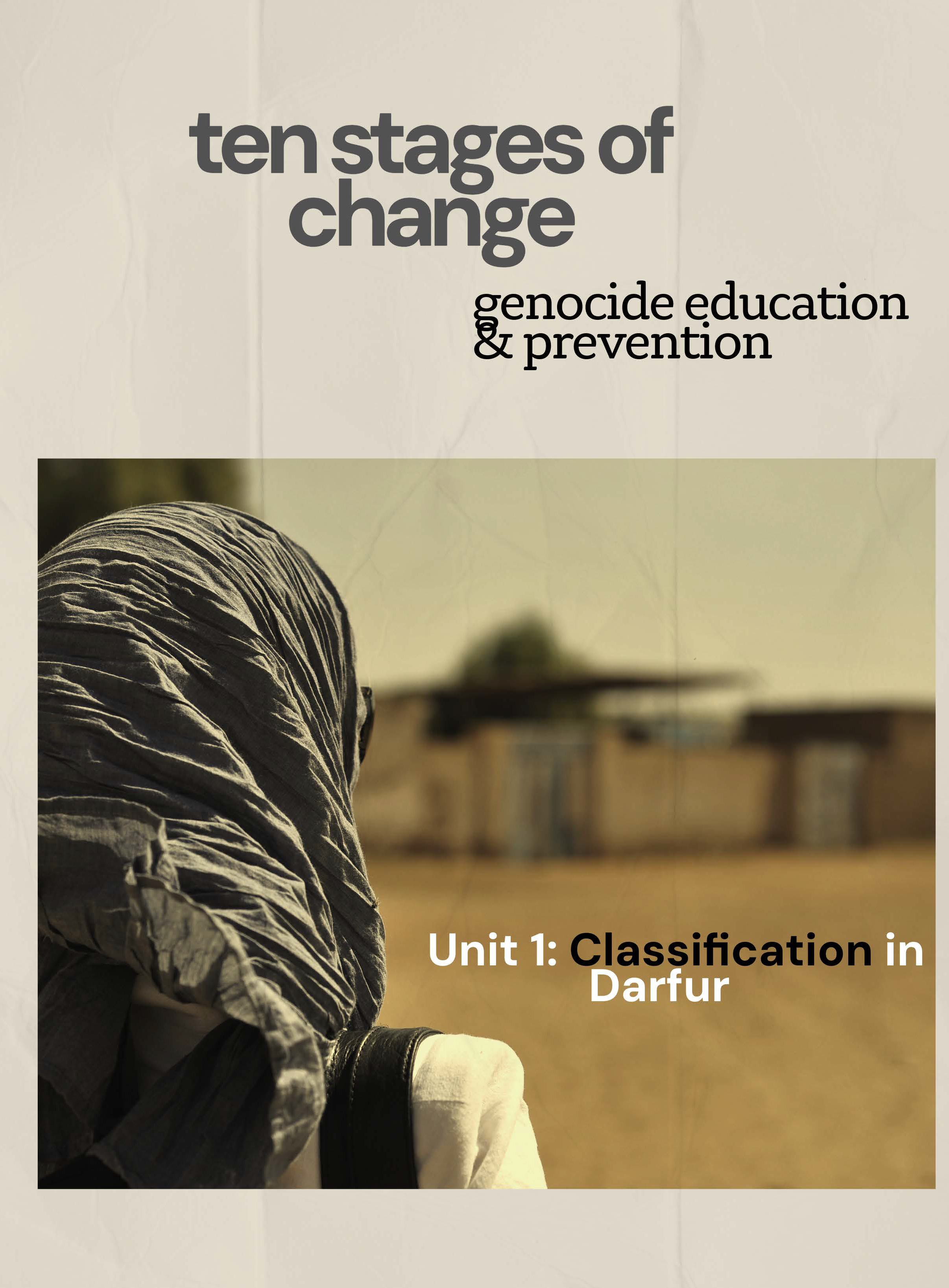
In this highly engaging, standards-aligned, and comprehensive unit plan, an interdisciplinary and rigorous approach introduces students to the concept and first stage of genocide (classification) through the lens of the Darfur conflict, appropriate for grades 8-12 with two versions of a differentiated anchor text and multiple instructional strategies and student-facing materials including newspaper archives, social media analysis, and historical document analysis.
Throughout the unit, students explore identity, labeling, and the "us vs. them" mentality through engaging activities, research, critical reading, group discussion, and a variety of visual tools. The curriculum is grounded in Gregory Stanton’s "Ten Stages of Genocide" framework and this particular unit includes a focus on critical media literacy, recognizing and revising divisive language, understanding the connection between geography and global conflict, as well as learning about social justice issues and the role of civic action in creating generational change.
The unit covers Common Core and TEKS related to analyzing and comparing primary and secondary sources (both social studies and ELA), analyzing rhetoric/tone/author's choice, cause/effect (social studies and geography), forming and defending an opinion/argument, annotation and research skills, academic vocabulary, and interdisciplinary, cross-curricular readings and research.
Instructional Procedures Include:
• Unit launch with hands-on exploration of the complex definitions of genocide as well as safe space norms and best practices
• Viewing and analyzing "The Call" TED Talk by Gregory Stanton
• Interactive presentation on the Ten Stages of Genocide
• Identity pie chart and discussion on classification in our world
• Close reading of anchor text “Us or Them” with two versions for different reading levels
• Group analysis: classification examples from history, school, and society
• Classification spectrum activity and justification
• Exit ticket synthesis and self-care strategies
• Formative CFUs by content area
• Summative exam (standards-aligned with answers, rationale, and short constructed response/extended response options)
• Primary and secondary sources including original, open source news clippings of national and global news reports from 2003-2005 and 2023 to the present for comparison
• Access to interactive audio recording of anchor text as well as transcripts from Ted Talk, sentence stems, and a multitude of differentiation strategiea
• Standards-based Teacher Tracking Tool for core content areas divided by TEK or Common Core standards
Why Teach It?
The most common use is for meeting Holocaust and genocide education state mandates. However, all content is carefully aligned to the most common state/common core learning standards for ELA and Social Studies (World History/Georaphy). The conent is of high interest to students, with most students reporting a desire to learn more in-depth about genocide.
With CFUs, summative assessments, formatives, and projects that are not only aligned exhaustively with specific learning standards, the content integrates both social studies and language arts skills seamlessly into the same lesson, with every subject covered extensively in each lesson. simply don't know where to start and can feel overwhelmed.
Most importantly, it empowers students to break the normalization of mass violence.