. Skip to main content
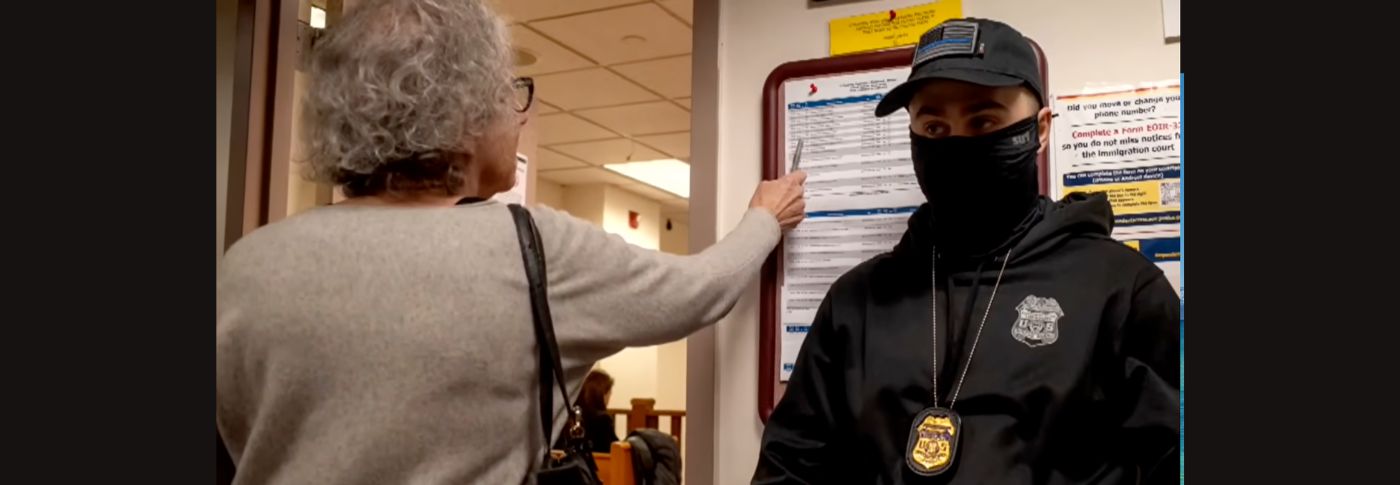
A masked federal officer wearing a badge stands inside a U.S. immigration court, while a visitor points to a posted notice board listing court information. A sign on the wall reads "Did you move or change your phone number? Complete a Form EOIR-33 so you do not miss notices from the immigration court."

A visitor interacts with a federal officer inside a U.S. immigration court. The Trump administration has fired scores of immigration judges as part of a broader effort to reshape the court system that oversees deportation cases. Judge Holly D'Andrea, president of the National Association of Immigration Judges, told PBS NewsHour the changes have been deeply disheartening. Photo: PBS NewsHour

Immigration Judge Says Trump Administration's Firings and Policies Are 'Disheartening

July 10, 2026

Immigration Judge Says Trump Administration's Firings and Policies Are 'Disheartening

Immigration courts are run by the Justice Department, which means judges must answer to the same administration whose policies they are ruling on. Now the Trump administration is firing those judges at a rapid pace. Here is what that means for due process and the rule of law.

Share

Share On Facebook
Share On Twitter
Share On Pinterest
Share On LinkedIn
Email

The Trump administration has fired more immigration judges as it moves to reshape the court system that polices deportations. Immigration courts are overseen by the Department of Justice itself. That means judges are required to answer to the administration whose policies they're ruling on. Ali Rogin spoke with Holly D'Andrea, president of the National Association of Immigration Judges.

View the transcript of the story.

NOTE: If you are short on time, watch the video and complete this See, Think, Wonder activity: What did you notice? What did the story make you think? What would you want to learn more about? You can also make a Google doc copy of these general discussion questions.

Remote video URL

Warm-Up Questions

  1. Who is Holly D'Andrea, and what is her background?
  2. What are deportation judges, and what branch of government are they a part of?
  3. When does immigration law shift the most, according to this segment?
  4. Why have many judges resigned under the current administration?
  5. How many immigration judges has the Trump administration fired?

Essential Questions

  • What constitutional questions does the Trump administration's mass firing of immigration judges raise about the separation of powers and judicial independence?
  • What role should judges play in ensuring that laws are applied fairly, even during periods of changing immigration policy?
    Media literacy: Consider how the story is framed. What questions does the reporter choose to ask? How might different questions or additional context influence your understanding of the issue?

What Students Can Do

Briefly research the differences between these three types of courts.

  • Article III courts
  • Article I courts
  • Immigration courts

Then, answer the following questions to further understand their differences.

  • Who oversees each court?
  • Who appoints the judges?
  • How long do judges serve?
  • What types of cases do they hear?
  • What are the advantages and disadvantages of each system?

Immigration Policy, History and Awareness

Explore dozens of rich, engaging resources to teach about immigration policy, history, and awareness with preK-12 students.

Republished with permission from PBS News Hour.

PBS News Hour Classroom
PBS News Hour Classroom helps teachers and students identify the who, what, where and why-it-matters of the major national and international news stories. The site combines the best of News Hour's reliable, trustworthy news program with lesson plans developed specifically for... See More
Advertisement

Post a comment

Log in or sign up to post a comment.