. Skip to main content
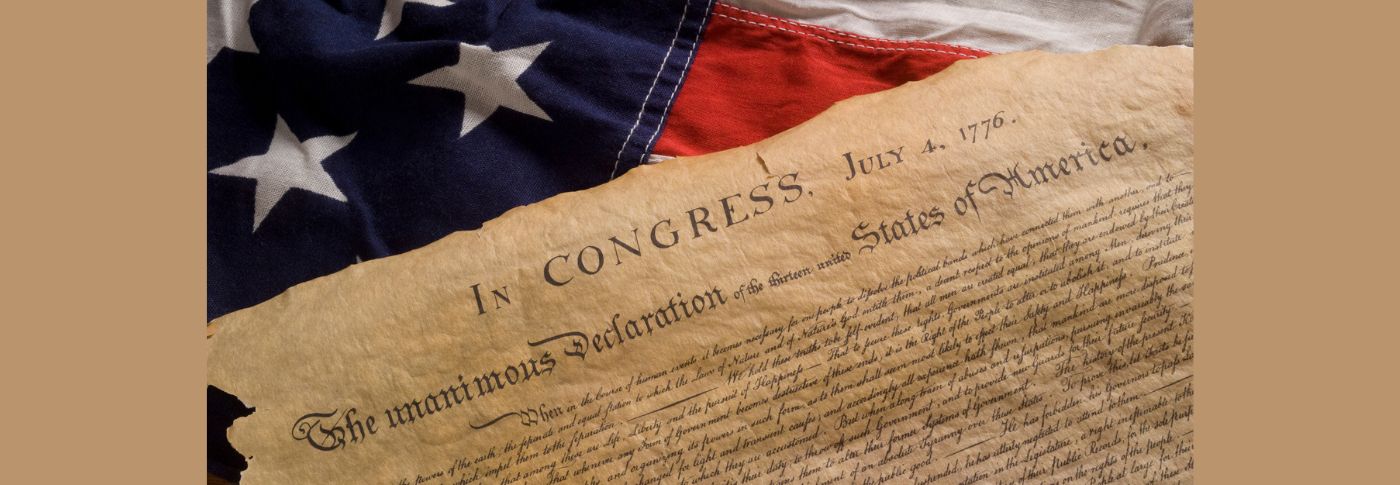
A stock photo of a worn parchment copy of the Declaration of Independence dated July 4, 1776, resting on top of an American flag, used to illustrate a PBS NewsHour lesson on Walter Isaacson's new book about the opening sentence of the Declaration. Photo: Getty Images.

Author Walter Isaacson calls it the greatest sentence ever written. As America turns 250, Judy Woodruff sat down with him to explore why those words still matter, where the country has lived up to them, and where it has fallen short.

Walter Isaacson on What He Calls 'The Greatest Sentence Ever Written

July 9, 2026

Walter Isaacson on What He Calls 'The Greatest Sentence Ever Written

Author Walter Isaacson calls it the greatest sentence ever written. As America turns 250, Judy Woodruff sat down with him to explore why those words still matter, where the country has lived up to them, and where it has fallen short.

Share

Share On Facebook
Share On Twitter
Share On Pinterest
Share On LinkedIn
Email

Ahead of America's 250th anniversary, author Walter Isaacson has turned his attention to a single sentence in the Declaration of Independence. Judy Woodruff spoke with Isaacson about the enduring power of those words and his new book, "The Greatest Sentence Ever Written." It’s part of her series, Crossroads: America at 250.

View the transcript of the story.

NOTE: If you are short on time, watch the video and complete this See, Think, Wonder activity: What did you notice? What did the story make you think about? What would you want to learn more about?

Remote video URL

Warm-Up Questions

  1. Who is Walter Isaacson, and what is his background?
  2. What does Isaacson consider to be the most important sentence in the Declaration of Independence?
  3. Where does Isaacson's use of the term "common ground" come from?
  4. Why was diversity seen as a strength for America?
  5. How did this embrace of diversity help communities of color?

Essential Questions

  1. Do you agree with Isaacson that there is a "deep contradiction" between the first line of the Declaration and the early history of the U.S.?
  2. In what ways do you think the U.S. has lived up to the first sentence of the Declaration? In what ways has it fallen short?
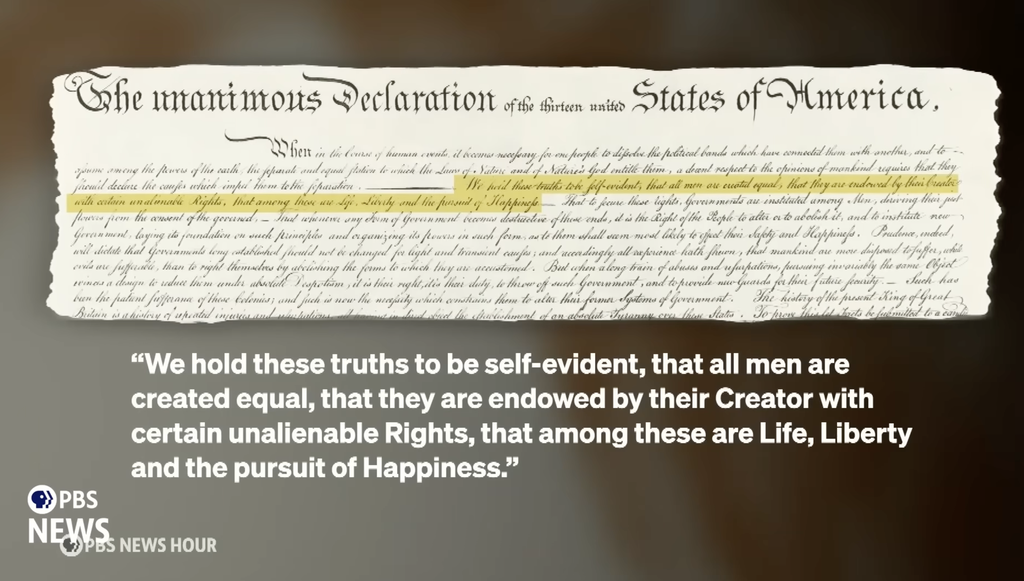
  3. Media literacy: The News Hour segment shows the sentence in the Declaration of independence that Isaacson considered to the best that was ever written. It is your turn to read over this sentence and analyze it. Discuss as a class what stands out about this sentence. Take time to carefully understand its significance.

A PBS NewsHour graphic showing a close-up of the Declaration of Independence with the second sentence highlighted in yellow, accompanied by the full text of the passage beginning "We hold these truths to be self-evident, that all men are created equal..."

What Students Can Do

Now it is your turn to find a sentence that you consider to be the most important in representing the ideals of the U.S. First, use a resource like the National Archives to examine some of the foundational documents of the U.S. You might talk to your teacher about other documents that might that might apply, from state constitutions or the Declaration of Sentiments to speeches such as the Gettysburg Address or MLK Jr.'s "I have a dream" speech.

After you have found the sentence that you think is critical to your understanding of the ideals of the country, write it down on a piece of paper. Then, write a few lines about why you think the sentence best captures what is most important about American ideals to you. Here are some guiding questions that might help you write about your sentence:

  • What made the sentence stand out?
  • Can the sentence be applied to a wider range of concepts? If so, what message does it convey?
  • Who wrote the sentence?
  • When did they write it?
  • How does the sentence reflect your own ideals?

America at 250: From Revolution to Republic

This collection traces the nation’s journey from colonial life and growing resistance to British rule, through the Revolutionary War, the Declaration of Independence, and the creation of a new constitutional government. Organized thematically, the resources support instruction in U.S. history, civics, and ELA while encouraging inquiry, discussion, and critical thinking.

Republished with permission from PBS News Hour Classroom.

PBS News Hour Classroom
PBS News Hour Classroom helps teachers and students identify the who, what, where and why-it-matters of the major national and international news stories. The site combines the best of News Hour's reliable, trustworthy news program with lesson plans developed specifically for... See More
Advertisement

Post a comment

Log in or sign up to post a comment.