. Skip to main content
People reduce gas emissions from factories, help save the planet stock illustration

Climate Change Is Already in the Classroom: How Schools Can Protect Student Health

August 28, 2026

Climate Change Is Already in the Classroom: How Schools Can Protect Student Health

Extreme heat, wildfire smoke and poor indoor air quality are disrupting schools. Modern HVAC (heating, ventilating and air-conditioning) systems and climate-resilient school buildings can help protect students and staff.

Share

Share On Facebook
Share On Twitter
Share On Pinterest
Share On LinkedIn
Email

Climate change is already affecting student health and learning, from students heading back to school during heat waves to wildfire smoke traveling across state lines and extreme weather disrupting communities across the country.

At a recent AFT Share My Lesson Vital Lessons webinar, AFT President Randi Weingarten, pulmonologist and public health expert Dr. Vin Gupta, and climate policy expert Leah Stokes talked about what those changes mean for children’s health—and what schools can do about them.

The conversation ranged from wildfire smoke and extreme heat to unsafe water and disrupted access to food and medical care, but it kept coming back to a simple point: Schools are one of the places with real opportunity to protect kids. In California, there is already a program designed to do exactly that—if the funding reaches the schools that need it.

How Climate Change Affects Children’s Health

When people think about climate change, they often picture a hurricane, wildfire or flood. Those events can be devastating, but climate change also affects people in less dramatic ways: through the air they breathe, the water they drink and the temperature inside the buildings where they spend their days.

Sometimes, the effects are immediate. Wildfires burning around Spokane, Wash., this August forced tens of thousands of people to evacuate. The fires also destroyed homes and filled the air with smoke. Extreme heat, at the same time, placed even more strain on residents’ hearts and lungs.

Other health effects can last for years. Climate-related disasters can disrupt access to safe water, food and medical care. Other environmental health crises also demonstrate how exposure can affect children for years. In Flint, Mich., children exposed to lead-contaminated water more than a decade ago remain at risk for lasting developmental effects, including learning difficulties, attention problems and behavioral challenges associated with childhood lead exposure. Families have also dealt with years of stress and distrust around something as basic as turning on the tap.

Even the same exposure can affect people differently. Dr. Gupta explained that a few days of wildfire smoke may cause irritation for one person but trigger a serious asthma flare-up for someone else. Children, pregnant people and those with chronic heart or lung conditions may face greater health risks.

Remote video URL

Where people live and work matters, too. A child living near a busy highway may breathe polluted air every day; an outdoor worker cannot simply stay inside when temperatures climb; and a rural community may have fewer cooling centers and a much longer drive to the nearest hospital.

Climate change is affecting everyone, Stokes added, but not everyone has the same tools to protect themselves.

When the Exposure to Extreme Heat and Wildfire Smoke Happens in a Classroom

For children, many of these risks follow them straight into school.

More than 9 million students across 10,000 schools lost class time to extreme weather during the 2024-25 school year, according to data collected by national nonprofit UndauntedK12. Research has also found that hotter classrooms make it harder for students to learn. In schools without air conditioning, each additional degree of heat over the school year has been associated with roughly 1 percent less learning.

Wildfire smoke creates another challenge. Nearly every county in the continental United States now experiences periods of wildfire smoke each year. Research has connected smoke exposure with lower test scores among younger students and increased illness-related absences among teachers.

Those numbers put data behind something that is fairly intuitive: It is hard to concentrate when a classroom is dangerously hot, and it is hard to learn when you are struggling to breathe.

Stokes sees this in her own children’s schools in California, which send alerts about temperatures being too high for children to go outside for recess. Other schools still lack functioning HVAC systems altogether.

For students and staff, the condition of a school building is increasingly part of the health equation.
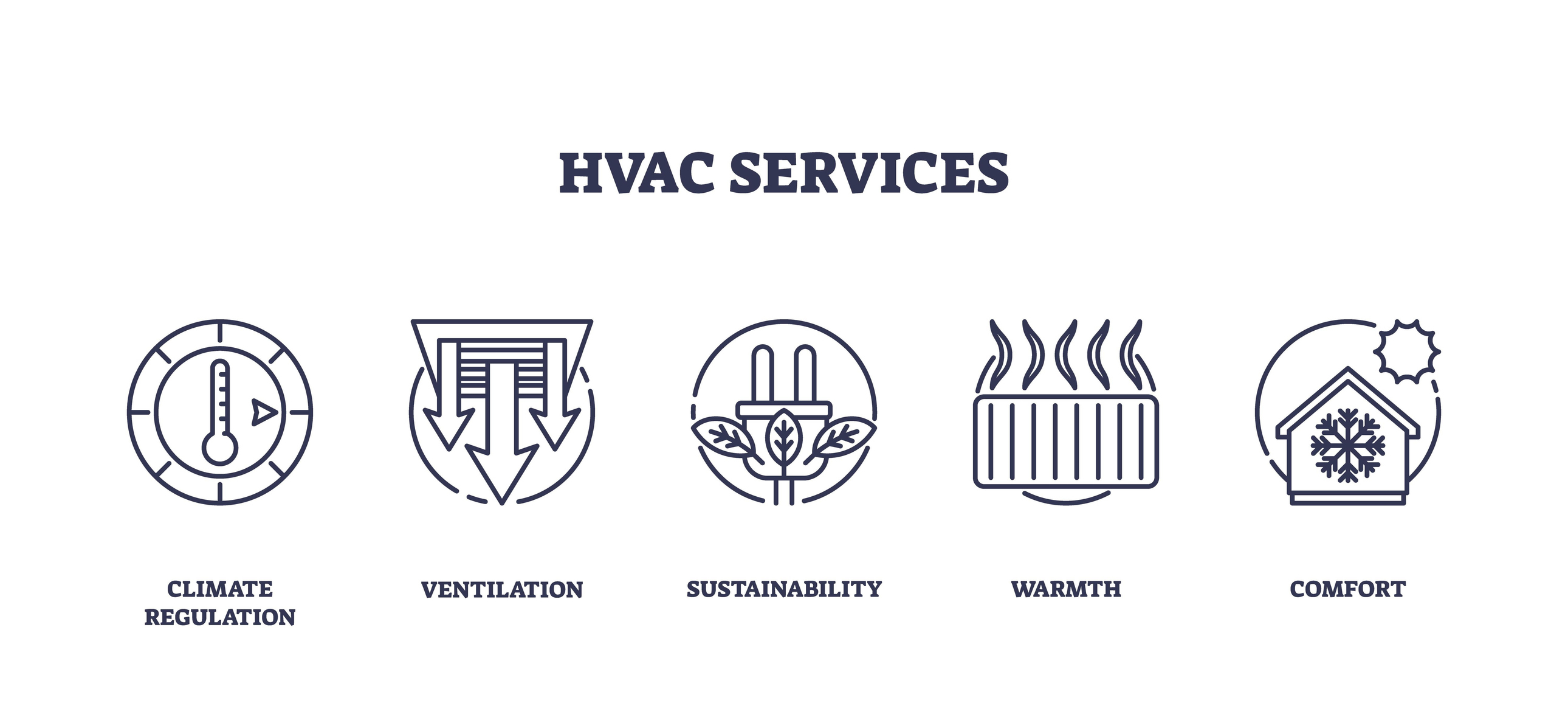
HVAC services icons depict climate regulation, ventilation, and sustainability. Outline... stock illustration

How School HVAC Systems Can Protect Student Health

Schools do not have to simply accept hotter classrooms and smoky indoor air. Schools can protect students from extreme heat and wildfire smoke by improving cooling, ventilation and air filtration.

Modern HVAC systems can cool classrooms during heat waves, filter harmful particles during wildfire smoke events and improve ventilation throughout the year. Schools can also serve as cleaner-air and cooling spaces for the surrounding community during emergencies. The Environmental Protection Agency guidance specifically recognizes the role well-operated school buildings can play in protecting students, staff, and community members during heat and smoke events.

In California, there is already a program built around that idea.

The California Schools Healthy Air, Plumbing and Efficiency Program, or CalSHAPE, provides grants to public schools to assess and improve their HVAC systems. Of more than 70,000 HVAC units at over 1,600 California schools, an analysis of CalSHAPE assessment data found that 54 percent were recommended for full replacement, and 73 percent had documented deficiencies. Nearly half had filtration below the level needed to effectively address wildfire smoke.

Thousands of schools have gone through the assessment and maintenance phase of CalSHAPE, but far fewer have received money for the upgrades and repairs those assessments identified.

The California Schools Healthy Air, Plumbing and Efficiency Program, or CalSHAPE, provides grants to public schools to assess and improve their HVAC systems.

About $194 million in CalSHAPE funding remains unspent. New applications were paused in 2024, and without action from the state, the remaining money could return to utilities, and the program could end before many schools have the opportunity to make the repairs they now know they need.

For Stokes, the frustrating part is that this is not a problem waiting for a technological breakthrough. Heat pumps and other modern electric HVAC systems can cool buildings, improve air quality and reduce climate pollution at the same time—but they need to be funded.

Building Climate-Resilient Schools and Communities

Climate change can easily feel too big for any one person, school or community to tackle. The panelists pushed back against that sense of helplessness.

Weingarten pointed to improvements schools made during the Covid-19 pandemic, when better ventilation and filtration became essential to reopening buildings safely. Those changes showed that aging school infrastructure can be improved when the need is recognized and resources follow.

Stokes made a similar case for climate resilience: Start locally. Improve the HVAC system, electrify a school building, replace a diesel school bus, or make sure students have a safe place to go when temperatures rise or wildfire smoke rolls in.

None of those steps solve climate change on their own, but they can make a school safer for the children and adults inside it today. Watch the free Vital Lessons webinar “Climate Change Is a Health Issue” to hear the full conversation and learn more about how climate change is affecting health, schools and communities.

Vital Lessons: Health Chats with Dr. Vin Gupta

Join Dr. Vin Gupta—pulmonologist, public health expert, and professor—for a yearlong series offering expert-led webinars, blogs, resources, and Q&A sessions on pressing health issues to help AFT members and communities stay informed and healthy. Access all on-demand town halls and register for the next one.

Disaster Recovery and Preparedness: Lesson Plans and Resources

Devastation, loss of life, and trauma following a natural disaster like hurricanes, earthquakes or wildfires can be emotionally damaging to our children. Share My Lesson’s curated collection of free resources will help not only you and your students, but your school and community understand and cope with natural disasters and their aftermath.

Ruben Aguilar Aguilar
Ruben Aguilar Aguilar is an analyst at Manatt Health in the firm’s Chicago office, where he supports legal and consulting teams through research, data analysis, and project coordination across health policy initiatives. Ruben brings a multidisciplinary perspective shaped by experience in health... See More
Advertisement

Post a comment

Log in or sign up to post a comment.