Inclusion with Intention: Building Classrooms Where Every Student Belongs
Inclusive education gives students with and without disabilities meaningful opportunities to learn, participate and build relationships together. Explore practical strategies for creating inclusive classrooms through co-teaching, accessible instruction, Positive Behavioral Interventions and Supports (PBIS), and extracurricular activities.
Tyler sat on the worn rug in his family’s living room, unpacking and repacking his book bag for the third time to make sure he had all of his supplies—sharpened pencils, pens waiting to be used for the first time, notebooks, headphones, and most importantly the new room assignment. He looked again at the paper that his mother carefully taped to his binder: Third grade. A new classroom, new classmates; his thoughts paused as he listened to his parents speaking softly in the kitchen.
“Did we make the right decision? Maybe we should request another meeting with the team, I. ...”
“Ellie, when we attended Tyler’s meeting last May, we agreed that he was making progress and needed the challenges offered in the class with Ms. Rodriguez. He will still have support.”
“Yes, but it will be different. It is different, because we can't afford any other options— this is it. He won’t be in a class of seven students with the same teacher he’s had since first grade. The other students know he was in another class, they know—they know he’s different.” Colin comforted his wife as she held back tears. “Tyler is a great kid. It’s because of you—your unwavering determination that he has come this far. We can do this.” Ellie walked over to the living room. Tyler looked up and smiled, “Mom, it’s OK. Remember what you always say? No matter what anyone else says, believe in myself.” Ellie nodded, hugged her son, and prepared for tomorrow.
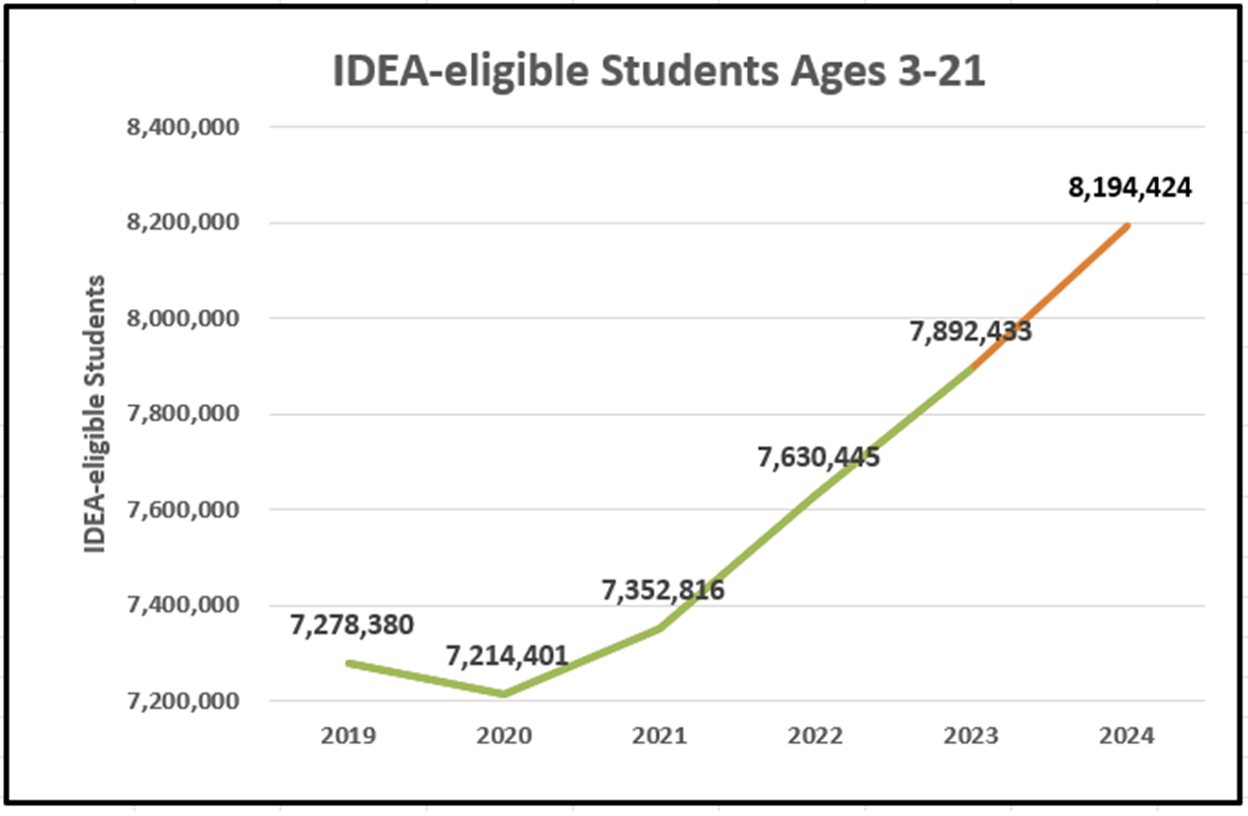
According to data released in 2026, the total number of students identified with disabilities ages 3-21 increased from 7,892,433 in 2023 to 8,194,424 in 2024, an increase of 3.8% percent. School-age students with disabilities ages 5 (kindergarten) to 21 increased by 3.9 percent. Students with specific learning disabilities, speech or language impairments, and other health impairments were the most likely to receive instruction in general education classrooms for 40 percent of the school day, according to a report from the U.S. Government Accountability Office.
What Is Inclusive Education? Guidance and Preparation
The foundation of inclusion begins with a school culture of belonging. Every enrolled student—regardless of ability level, those with or without disabilities, English language learners, LGBTQIA+, and those from culturally diverse backgrounds—should have a welcoming place within the school. The design for success includes embedded and practiced support and services to ensure accessibility and value for every student’s contribution. According to the Individuals with Disabilities Education Act, students determined eligible for specially designed instruction and services should receive instruction in the least restrictive environment. That does not mean, however, that all students with individualized education programs (IEPs) must receive those services and instruction in the general education setting. Rather, the educational setting is based on the individual needs of the student.
So now that you have the information, what’s next? Let’s look at some possible strategies and models to help ensure students whose least restrictive environment has been determined to be the general education setting receive the required educational benefit outlined in their IEPs.
Students learn patience with peers who learn at a different pace from themselves; students with disabilities tend to show an increase in academic achievement and self-esteem; and both benefit from friendship.
Co-Teaching Strategies for Inclusive Classrooms
When students with and without disabilities receive instruction together, there are mutual benefits. Students learn patience with peers who learn at a different pace from themselves; students with disabilities tend to show an increase in academic achievement and self-esteem; and both benefit from friendship. Additionally, there is teacher insight about students with disabilities and increased collaboration among colleagues. Co-teaching involves administrator support to ensure two licensed educators receive planning periods to develop plans that incorporate students’ accommodations, IEP goals, and determine which of the six co-teaching models they will use to ensure value is being provided to the students:
Parallel teaching,
Alternative teaching,
Station teaching,
Team teaching,
One teach, one assist, or
One teach, one observe.
Consider These Essentials for an Inclusive, Co-Taught Classroom
Environment
Consider potential barriers to access and participation in your co-taught classroom.
Seating: How does the classroom arrangement support access, engagement and collaboration?
Grouping: How can students be grouped intentionally to support learning and meaningful peer interactions?
Materials
Ensure that instructional materials are accessible and usable by every student.
How can you make materials accessible to all learners?
What accommodations, adaptations, or assistive technology may be needed?
Are materials available in formats that support different learning needs?
Curriculum
Consider how the curriculum can provide meaningful access and opportunities for all students.
Texts: Are reading levels, formats and content accessible?
Lesson plans: Do plans incorporate accommodations, IEP goals and multiple ways for students to engage with the content?
Student work: Are students provided different ways to demonstrate what they know and can do?
Universal design: How can lessons be designed from the outset to anticipate and address a range of learner needs?
Hidden Barriers
Consider practices, policies, or assumptions that may unintentionally limit student access, participation, or belonging.
Honor the students’ strengths, interests, identities and differences.
Identify barriers that may not be immediately visible to students or educators.
Consider: How can you respond when a barrier is outside your direct control?
Focus on what is within your control—relationships, instructional practices, communication and opportunities for participation.
Using PBIS to Support Students with Disabilities
Positive Behavior Interventions and Supports or PBIS are specifically mentioned in IDEA for preventing exclusion, improving educational outcomes and addressing the behavior support needs of students with disabilities.
PBIS includes a three-tiered framework to support students with disabilities, which integrates general and specialized support into the larger schoolwide PBIS framework.
Tier 1: Students with disabilities benefit from Tier 1 when supports are developed and provided in a way that is accessible and relevant to all students:
Explicit instruction in social, emotional and behavioral skills
Many opportunities to respond
Positive acknowledgments
Brief reminders, e.g., prompts
Tier 2: The support provided at Tier 2 often involves group interventions with 10 or more students participating:
Social skills groups
Self-management
Academic supports
Tier 3: Students with and without IEPs can benefit from Tier 3 supports if Tier 1 and Tier 2 supports alone have not been successful in meeting the student’s needs: Design an individualized Behavior Support Plan with interventions driven by a Functional Behavioral Assessment.
Creating Inclusive Extracurricular Activities
Ensure students with disabilities have equitable access to participate in extracurricular activities with their nondisabled peers. The Government Accountability Office report also noted programs such as Best Buddies and Special Olympics where students with disabilities partnered with other students to build friendships, improve social skills, and create inclusive school communities.
Intent, guidance, practice and empathy are essential to successful inclusive education. By removing barriers, planning accessible instruction and creating meaningful opportunities for participation, educators can build inclusive classrooms where every student experiences belonging and knows their contributions are valued.
In this collection, you will find resources to help students better understand different disabilities, promote inclusion, challenge ableism, and make accommodations for others.
Special Education: Free Lesson Plans and Resources
This curated Share My Lesson collection features some of our favorite prek-12 lesson plans, resources and professional development webinars for working with students and colleagues in the field of special needs education.