. Skip to main content
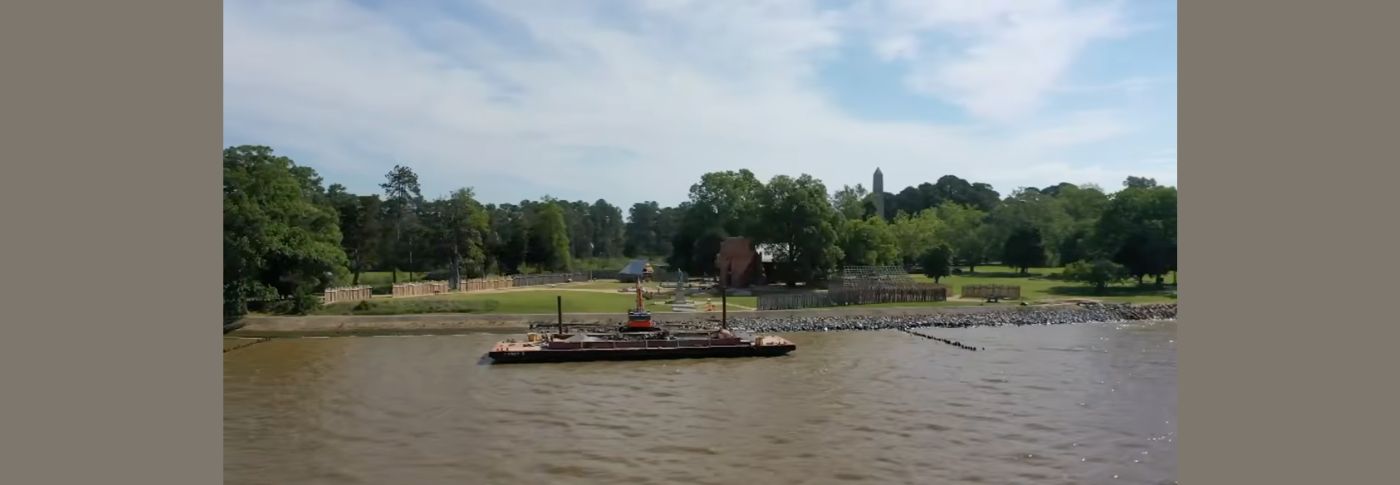
An aerial view of Jamestown Island, Virginia, with a work barge on the James River in the foreground and the historic Jamestown Settlement site visible on shore, including a reconstructed fort and the Old Church Tower rising above the trees.

A work barge sits on the James River near Jamestown Island, Virginia, where archaeologists are racing to uncover artifacts before rising seas swallow the site. Archaeologist Sean Romo of Jamestown Rediscovery predicts the island could be split into separate areas as soon as 2050 due to sea level rise. Photo: PBS NewsHour

How Climate Change and Rising Seas Endanger Historic Sites Like Jamestown, Virginia

July 7, 2026

How Climate Change and Rising Seas Endanger Historic Sites Like Jamestown, Virginia

As America celebrates its 250th birthday, some of its oldest and most important historic sites are disappearing underwater. Archaeologists at Jamestown, Virginia are racing against the clock to preserve what they can before the rising James River washes it away for good.

Share

Share On Facebook
Share On Twitter
Share On Pinterest
Share On LinkedIn
Email

As the country celebrates its 250th anniversary, rising seas and coastal erosion are putting some of America’s most historic places at risk. For our ongoing series, Tipping Point, special correspondent Ben Tracy with Climate Central reports from Jamestown, Virginia, where archaeologists are racing to uncover America’s past before it’s washed away.

View the transcript of the story.

NOTE: If you are short on time, watch the video and complete this See, Think, Wonder activity: What did you notice? What did the story make you think about? What would you want to learn more about?

Remote video URL

Warm-Up Questions

  1. Who is Sean Romo, and what is his background?
  2. What is the mission of Jamestown Rediscovery?
  3. When does Romo predict that Jamestown Island might be split into separate areas from the rising sea levels?
  4. Which sites are identified as being in the most danger from climate change?
  5. How will Rob Young’s research benefit future conservation efforts?

Essential Questions

  1. Young’s research centers around the risk that climate change poses to national parks. What’s significant about him saying that it doesn’t matter who caused climate change, but that its effects are what should be considered the top priority?
  2. Think about Jamestown and Fort Sumter and their place in American history. Why are they so significant and worth preserving as long as possible?
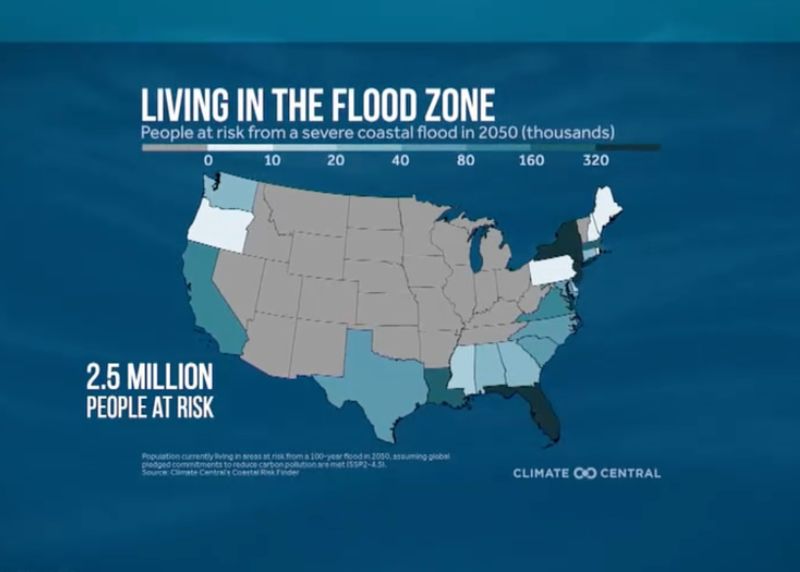
  3. Media literacy: Look over this image of risk from severe coastal flooding across the United States. After reading, answer the following questions:

A Climate Central map titled "Living in the Flood Zone" showing people at risk from a severe coastal flood in 2050 by U.S. state, with 2.5 million people currently living in at-risk areas. States along the Gulf Coast, Atlantic Coast, and parts of the Pacific Coast are shaded darkest, indicating the highest risk. Source: Climate Central's Coastal Risk Finder.

Identify the areas most in danger from coastal flooding. Many of our oldest sites and cities are located along the East Coast and within these risk zones. What does it mean for the people and places standing in danger? How can the conversation shift from alarm over climate change’s future results to action in order to address current risks?

What Students Can Do

Explore this page from the National Parks Service website on coastal national parks sites as mentioned by Young. Look through the interactive map and find one that looks interesting. Research the site further, paying particular attention to its history and where the site is located. Compare it to the above coastal flooding risk map. After students are done researching, they should discuss their findings and compare to other students’ sites. Some guiding questions can be:

  • Consider the site you chose. What’s its risk level according to the map? What would significant damage or loss to this site look like?
  • What efforts could be made to help stall or reverse that risk? Are they feasible considering the site’s location or visitor presence?
  • How can attention be drawn to conserving your chosen site as well as many others? What would an effective campaign look like? Who would need to be petitioned for change?

Lesson Plans on Climate Change

Explore more resources for educators to find a wide-range of relevant preK-12 lessons on climate change or supporting young people as they continue to lead the conversation around the climate change crisis.

Republished with permission from PBS News Hour Classroom.

PBS News Hour Classroom
PBS News Hour Classroom helps teachers and students identify the who, what, where and why-it-matters of the major national and international news stories. The site combines the best of News Hour's reliable, trustworthy news program with lesson plans developed specifically for... See More
Advertisement

Post a comment

Log in or sign up to post a comment.