. Skip to main content
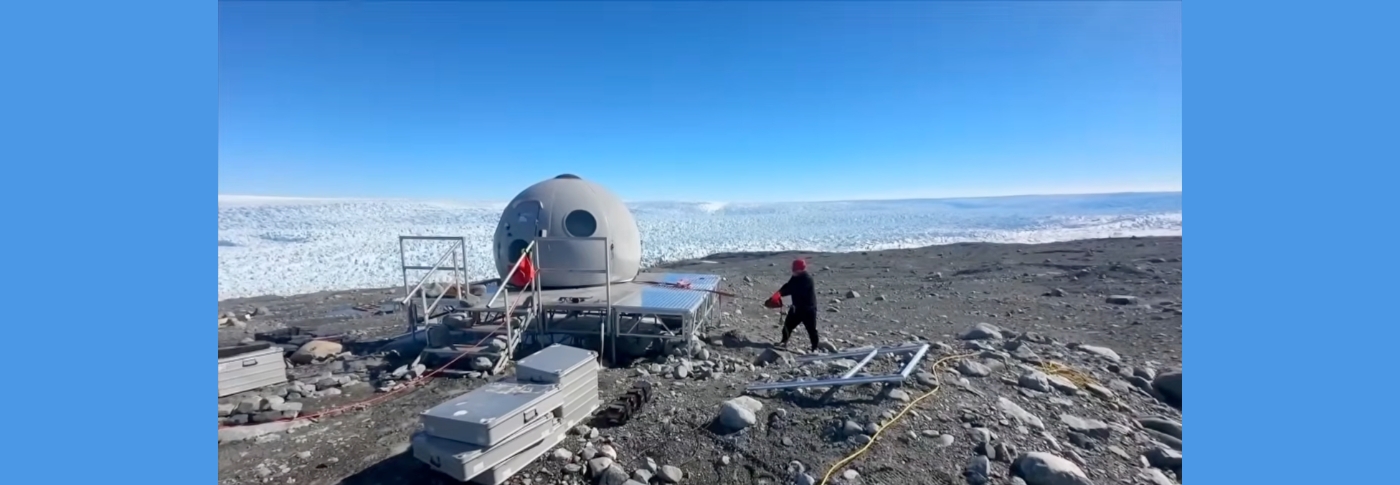
A domed research station sits on rocky terrain beside a glacier as a person in a red hat carries equipment nearby.

A research station sits at the edge of a glacier, where scientists study melting ice and test geoengineering ideas to slow it. Photo: PBS NewsHour

Scientists Explore Large-Scale Geoengineering to Slow Glacier Melt

August 25, 2026

Scientists Explore Large-Scale Geoengineering to Slow Glacier Melt

As glaciers melt faster, some scientists are floating bold geoengineering ideas to slow the loss. Students explore how these interventions might work, why critics push back, and what's at stake for coastal communities worldwide.

Share

Share On Facebook
Share On Twitter
Share On Pinterest
Share On LinkedIn
Email

At a time when the impact of climate change is undeniable, some researchers suggest we need to start work on far more ambitious approaches for tackling these problems. These proposals are often referred to as geoengineering. Science correspondent Miles O'Brien looks at one such concept to deal with the melting of glaciers and sea ice. It's for our series, Tipping Point.

View the transcript of the story.

Short on time? Watch the video and complete the following See, Think, Wonder questions: What did you notice? What did the story make you think? What would you want to learn more about?

Remote video URL

Warm-Up Questions

  1. Where is the glacier that David Holland is studying?
  2. Why is Holland studying the Jakobshavn Glacier?
  3. What is geoengineering, and how does it work?
  4. How could geoengineering help slow or reverse the melting of glaciers like the Jakobshavn Glacier?
  5. Who has criticized geoengineering ideas meant to slow the melt of the Thwaites Glacier, and why has he criticized those plans?

Essential Questions

  • After watching this segment, do you think geoengineering is a reasonable idea for slowing glacial melt? Why or why not?
  • What might be some other ways to slow glacial melt?
  • Media literacy: What else would you like to know to better understand how geoengineering might work? How could you find out?

What Students Can Do

This segment is part of a series that explored the scientific study of melting glaciers. Journalist Miles O'Brien traveled with scientists to Antarctica and explored ways those scientists are trying to understand climate change, the history of climate stretching back millions of years and the potential future impact of melting glaciers.

Students can check out more in the series here.

After skimming some of the segments, discuss:

  • What do you think would be the biggest impact of melting glaciers in places like Antarctica and Greenland?
  • What do you think is the best way for scientists to determine how glacial melt will impact people living in coastal areas?
  • What strategies seem most likely to help slow or reverse the melting of glacial ice?

For those students and teachers who have watched some or all of the series, News Hour has created a survey that will help guide future decisions about climate coverage. You can help shape that coverage by taking the survey here.

Lesson Plans on Climate Change

Explore more resources for educators to find a wide-range of relevant preK-12 lessons on climate change or supporting young people as they continue to lead the conversation around the climate change crisis.

Republished with permission from PBS News Hour Classroom.

PBS News Hour Classroom
PBS News Hour Classroom helps teachers and students identify the who, what, where and why-it-matters of the major national and international news stories. The site combines the best of News Hour's reliable, trustworthy news program with lesson plans developed specifically for... See More
Advertisement

Post a comment

Log in or sign up to post a comment.