
About This Lesson
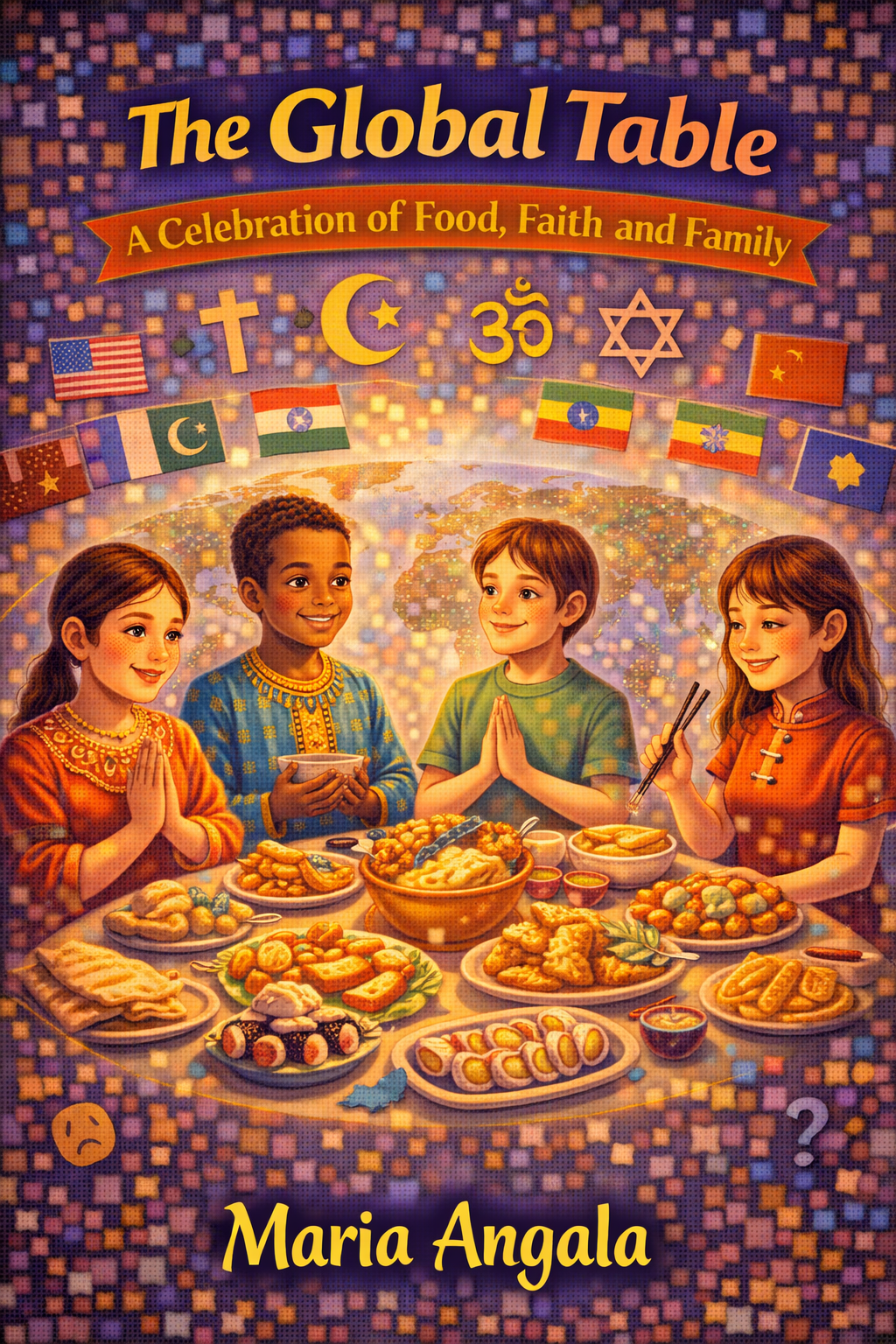
Audio Link:eBook "The Global Table" by Maria Angala, NBCT: A Celebration of Food, Faith, and Family | Cultural Food Traditions and Global Citizenship Lesson for Elementary and Middle School
Ask any kid what their family eats for holidays, and watch what happens.
The quiet ones start talking. The kids who never raise their hands lean forward. Because food—more than almost anything else—cuts straight through to something personal and real. Every student in the room has a dish. Every dish has a story. And that is exactly where this lesson starts.
What's this story actually about?
Ledya lives in a building that smells like a cookbook. Apartment 4B: ginger and soy. Apartment 2A: fried plantains. Apartment 5C: warm cinnamon and toasted nuts. Her building hosts a "Global Table" potluck every year—a long table where neighbors bring their best dishes, their family histories, and their faith traditions, and somehow, despite different languages and different religions and different everything, everyone understands the "Yum."
It's a deceptively simple setup that carries a genuinely sophisticated idea: food isn't just fuel. It's memory, ancestry, faith, and connection all pressed into one pot. When Ledya's Mama explains why they make Jollof rice every year—because this rice is our history—that line lands differently for every kid who has ever helped stir something at the stove with their grandmother.
What the story covers:
West African Jollof rice and the meaning of carrying home in your heart. Indian Naan and Dal as a sign of peace, shared hand to hand. Jewish Hamantaschen cookies tied to Purim and collective memory. Mexican tamales and the patient, communal work of wrapping corn husks together. The lesson weaves food traditions from Eid, Diwali, Passover, and Christmas into a single table—not to flatten them, but to show that across every tradition, people are doing the same thing: sharing the best of themselves.
That's global citizenship. Not as a vocabulary word. As a feeling.
What's inside:
A complete illustrated reading passage (9 pages) following Ledya's Global Table potluck, plus a Professional Planning Note built for 50-minute English and Social Studies blocks. Differentiated activities for Level 1, 2, and 3 learners. PDF and Easel by TpT compatible. Zero prep needed.
The warm-up prompt alone is worth bookmarking for the start of any school year—if you had to bring one dish to represent your family, what would it be? What does it smell like?—because it does something no worksheet can: it makes every single student an expert on something. The "Classroom Recipe Map" activity in the "We Do" section physically places students' food traditions on a world map, turning your classroom into a global geography lesson in about fifteen minutes.
And the Level 3 metacognitive prompt—why is food such an easy way for people to make friends? How can "breaking bread" help solve a conflict?—connects cultural celebration to conflict resolution and civic life. That's the kind of thinking that shows up on critical writing assessments. And it starts with tamales.
Who this is built for:
Elementary and middle school ELA and Social Studies teachers, especially in diverse or multicultural classrooms. ESL/ELL teachers building cultural background knowledge and descriptive vocabulary. School counselors running community-building units at the start of the year. Any teacher planning a cultural heritage day, international food event, or global citizenship unit who wants a reading passage that actually earns the conversation.
Works beautifully alongside Last Stop on Market Street, The Name Jar, Esperanza Rising, Inside Out & Back Again, or any multicultural anchor text. Also pairs naturally with descriptive writing units or social studies standards on world cultures and world religions.
Why this one is different from every other "food and culture" resource:
Most multicultural food lessons are surface-level—here's a dish, here's a country, color the flag. This one goes deeper. It connects food to faith, to memory, to history, to the specific ache of leaving a place and trying to carry it with you. Ledya's Mama doesn't just make Jollof rice because it tastes good. She makes it because that's how they remember who they are.
That's a conversation worth having in any classroom. And it starts with a warm pot and a girl hopping on one foot.
Get FREE resources for your SPED & multilingual learners!
✯ Earn TpT credits (and save money!) Did you know you earn credits toward future purchases when you leave feedback? Go to your “My Purchases” page and click “Provide Feedback” next to any resource. Share a quick rating and comment—it helps me continue creating meaningful supports for students who need it most.
💡 Your feedback = more targeted FREE resources for your classroom 💡 Your credits = savings on future purchases
Win-win!
Stay connected for more FREE ACCESS resources:
✯ Click the ⭐ “Follow Me” button at the top of my store. When you follow, you’ll be the first to know when I post:
- FREE literacy supports for struggling readers
- SPED & ELL scaffolds you can use right away
- New ACCESS-aligned resources and updates
Standards alignment: CCSS ELA RL and RI strands for grades 3–7, including theme, character, descriptive language, and cultural informational text. Strong CASEL SEL alignment—social awareness, empathy, and global citizenship. Connects to social studies standards covering world cultures, world religions, immigration, and community.
TAGS: global citizenship lesson elementary, food traditions multicultural reading, cultural food and family story, diverse traditions reading passage grades 3 7, world cultures food activity classroom, Jollof rice West Africa classroom story, multicultural potluck lesson plan, religious holidays food traditions reading, SEL community building food activity, immigrant family story elementary, descriptive writing food traditions lesson, cultural heritage reading passage, global table classroom activity, diverse faith traditions lesson ELA, social studies world cultures reading passage
⭐ Neurodiversity-aligned, Low-prep and Scaffolded for IEPs.
Thank you so much for downloading THIS RESOURCE! Please try other awesome Common Core resource packs from my TpT store. Don’t forget to leave me a few words on how this was helpful to you.
🔥Join our growing FUNSHINE community: BilingualSPED.com