
About This Lesson
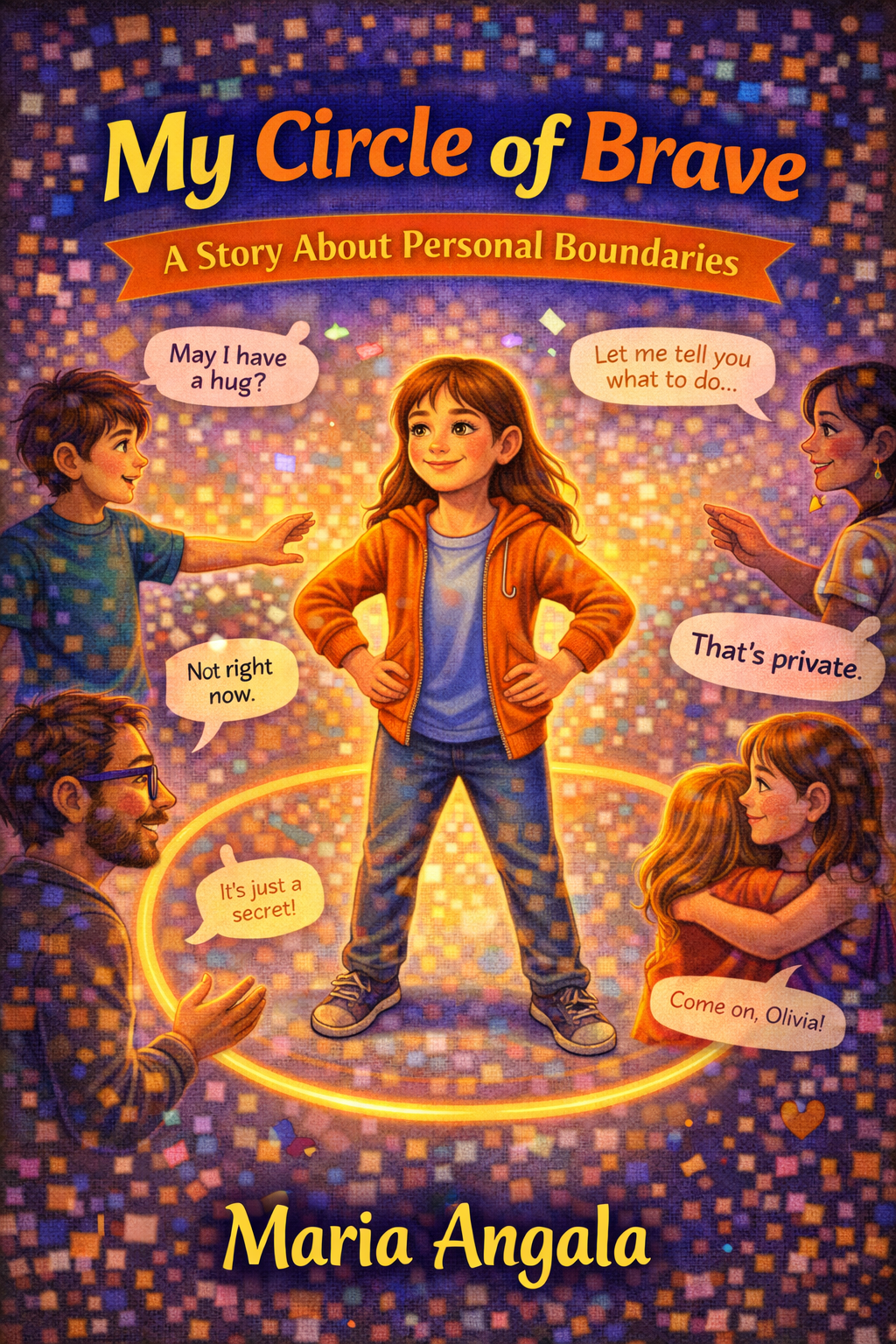
Link to Audio: eBook: "My Circle of Brave" by Maria Angala, NBCT: A Story About Personal Boundaries | Body Autonomy, Consent & Personal Safety Story + SEL Lesson Plan | No Forced Affection, Brave Steps & Body Safety | PreK–6 SPED, SEL & School Counseling
My name is Aria. I have a secret. It is not a hidden toy or a buried treasure. It is something I carry with me everywhere I go.
It is my Circle of Brave.
Most people cannot see it. But I can feel it. It is as wide as my arms can reach. Whoosh. I spin in a circle. This space belongs to me.
This is my body autonomy.
My Circle of Brave: A Story About Personal Boundaries is the most complete, child-accessible body autonomy and personal safety narrative available for PreK–6 classrooms — a fully illustrated story that teaches body ownership, consent, the difference between safe and unsafe touch, and what to do when the circle gets pushed, all through the warmth and specificity of Aria's real daily situations. It comes with a complete, 3-level differentiated SEL and English lesson plan anchored in the Circle of Brave Lab — including a hula hoop First Five that makes personal space physically felt before a single word of instruction is spoken. Two resources. One download. The body safety story that actually sticks.
Why This Book Fills the Most Critical Gap in Elementary SEL:
There is no shortage of personal boundaries resources on TpT. There are worksheets, posters, social stories, anchor charts, and curriculum units by the hundreds. Most of them share a common limitation: they explain personal boundaries intellectually — in language that children can repeat without ever actually feeling. A child who can recite "my body belongs to me" hasn't necessarily internalized what that means when a well-meaning relative reaches for a hug at Thanksgiving.
My Circle of Brave does something structurally different. It grounds body autonomy in sensation — the squeeze in the tummy that tells Aria her circle is being pushed. The physical spin that maps the space. The hula hoop in the First Five activity that makes every child in the room feel the difference between far away and stepped on. The book doesn't just teach the concept. It makes the child feel the concept in their body first — which is exactly how children actually learn to recognize and respond to boundary violations in real situations.
That embodied, sensation-first approach is what separates this book from every other personal boundaries resource on TpT. And it's why children remember it.
What's Inside — Story + Complete Lesson Plan:
Two complete resources in one download — a fully illustrated picture book narrative and a ready-to-teach 3-level differentiated SEL and English lesson plan.
THE STORY — Aria's Circle, Her Rules, and Her Brave Voice:
The Circle of Brave — Aria introduces her secret: the Circle of Brave, the space as wide as her arms can reach that belongs entirely to her. Body autonomy named directly, defined simply, and introduced as something Aria carries — not something she has to earn or ask permission for. It's hers from the first page. That framing — body autonomy as a possession rather than a rule — is the most important conceptual move in the book.
The Rules of the Circle — Aria's mom gets morning snuggles. Seth gets high-fives. But sometimes even people she loves have to stay on the edge. Then: the party. "Aria, give Great Aunt Maria a big hug!" The tummy squeeze. She didn't feel like a hug — she felt like a Wave or a Hello. Her voice was small but brave: "I don't want to hug right now. Can I give a high-five instead?" Aunt Maria smiled and said yes. That is consent. This scene — a child declining a hug from a family member at a social event, with a parent present, and having that choice honored warmly — is the most important scenario in the entire book. It's the exact situation where children are most frequently pressured into unwanted physical contact, and where the "just this once, be polite" message most directly undermines body safety education. Aria's brave small voice and Aunt Maria's gracious response model what respectful consent culture actually looks like in family settings.
The Tickle Monster — Kabu chases Aria, tickling her ribs. She's laughing — hee-hee-ha — but today she's tired and wants to draw a dragon. "Stop!" Kabu doesn't stop. "You're laughing, so you must like it!" Aria stands up tall: "My 'Stop' means stop. Even if I am laughing, my body says I'm done." This chapter addresses the single most critical and most frequently misunderstood element of consent education for children — the difference between laughing and consenting. The most dangerous lesson a child can absorb is that their laughter during unwanted touch means they liked it. Aria's statement — "even if I am laughing, my body says I'm done" — is the most important sentence in the book. It deserves to be read aloud in every K–6 classroom in America.
When the Circle Feels Small — When the circle gets pushed or squished, Aria has the Brave Steps: Step Back (give the circle more room), Use Your Boss Voice ("I need space" or "Please don't touch me"), and Find a Tall Person (tell a teacher, parent, or coach). Then the reframe that changes everything: "I'm telling!" is not being a tattle-tale. It is being a Boundary Boss. That single reframe — one of the most damaging social messages children receive is that reporting boundary violations makes them a snitch — is the child protection intervention this story makes in narrative form. Children who have internalized "telling is tattling" don't report. Children who understand themselves as Boundary Bosses do.
The Circle is for Everyone — Aria realizes that wanting her circle respected means she has to respect others' circles too. When she sees Seth sitting alone on the swings, she stays on the edge of his circle. "Can I sit next to you?" Seth nods. "Yeah. Thanks for asking." Asking "Can I?" is how we show love. This mutuality chapter — body autonomy as a value we hold for everyone, not just for ourselves — is what elevates this story from a self-protection resource to a full consent culture curriculum in picture book form.
My Brave, My Choice — Bedtime. Mom asks: "Can I have a bedtime hug, or are we doing a Butterfly Squeeze?" "Butterfly Squeeze," Aria says. They press palms together and wiggle fingers like wings. It felt just right. The bedtime scene is where the story's cumulative impact lands — a parent modeling consent-asking with their own child, offering alternatives, and accepting the answer with warmth. The message to children: the adults in your life who love you will ask. And the message to parents: this is what it looks like when you model it right.
THE LESSON PLAN — The Circle of Brave Lab:
A complete SEL and English lesson plan providing students with concrete vocabulary and practiced skills for self-advocacy — not just conceptual understanding.
- First Five — The Hula Hoop: A student stands inside a hula hoop. Teacher asks: "How do you feel when I stand far away? How do you feel when I step on the hoop?" This is the single best personal space opener I've seen in any elementary SEL lesson plan. The hula hoop makes the Circle of Brave physical and felt before the story begins — which means every child arrives at the narrative already carrying the embodied experience that makes it meaningful. Concrete, sensory, immediately effective across every ability level
- Whole Group (I Do): Define Body Autonomy using the story to show that even "nice" people — like Aunt Sue — need to respect the circle. The "nice people" framing is critical because the most common source of boundary pressure for young children is trusted, beloved adults. A curriculum that only addresses "stranger danger" misses the overwhelming majority of boundary violations children actually experience
- Practice (We Do): Role-play the Brave Steps. Practice saying "No, thank you" or "I need space" in a firm Boss Voice. Physical practice of the actual words — not just understanding the concept but rehearsing the language in the body — is the evidence-based element that determines whether body safety education produces behavior change
- Level 1 Learners: Color Aria in her circle and draw Safety People (Mom, Teacher) who are allowed in — concrete, visual, accessible for students with significant cognitive disabilities and early childhood learners
- Level 2 Learners: Circle "Good Choices" on a worksheet (asking for a hug, stopping when someone says Stop) — reading comprehension with consent decision-making focus, text evidence practice
- Level 3 Learners: Metacognitive writing — "Think of a time you felt squished. What is one sentence you can practice saying next time to protect your Circle of Brave?" — personal application, self-advocacy language development, and transfer to real situations
The "Forced Affection" Scene — Why It Matters More Than Most Teachers Realize:
The Great Aunt hug scene is the most important scenario in the book — and the one that generates the most parent and teacher discomfort when it's taught, which is exactly why it needs to be taught.
Research on child sexual abuse prevention consistently identifies one factor above all others as the most significant predictor of whether a child will disclose abuse: whether they have been taught and practiced saying no to unwanted physical contact from trusted adults in low-stakes situations. Children who have been taught that politeness requires them to accept hugs from relatives they're uncomfortable with have also been taught — inadvertently, but powerfully — that adult authority over their body supersedes their own discomfort. That lesson does not stay contained to family gatherings.
Aria's scene isn't anti-family or anti-affection. Aunt Maria's warm response — "Of course, Aria! A high-five is great!" — models exactly the kind of gracious acceptance that makes consent culture work. The lesson is not "don't hug family members." It is "children's physical boundaries deserve respect even when — especially when — the person asking is someone they love and trust." That is one of the most protective lessons any elementary classroom can teach.
The "Stop Means Stop Even When Laughing" Lesson — Why Kabu's Chapter Is Critical:
The Tickle Monster chapter does work that almost no other elementary body safety resource does — it explicitly addresses the laughing-doesn't-mean-yes confusion that children carry from early play experiences into adolescence and adulthood.
"You're laughing so you must like it" is not just Kabu being a typical sibling. It is one of the most consequential misconceptions about consent that exists — one that researchers, prosecutors, and survivor advocates have identified as central to sexual violence culture. Teaching children that their laugh during unwanted touch is not consent — in an age-appropriate, play-context, sibling scenario — is the earliest possible intervention point for that misconception. Aria's statement "even if I am laughing, my body says I'm done" is language that children can carry forward through every developmental stage.
Who This Resource Is For:
- Elementary classroom teachers (K–5) who need a high-quality, age-appropriate body safety and consent anchor text that covers body autonomy, forced affection, safe/unsafe touch, and reporting — in a single engaging narrative with a complete lesson plan
- School counselors delivering personal safety curriculum, body autonomy lessons, and child abuse prevention education — the Brave Steps give students practiced language, not just conceptual vocabulary
- Special education teachers whose students with cognitive disabilities, autism, and communication differences are at significantly elevated risk for boundary violations and who need a concrete, sensory-accessible body safety curriculum
- Parents who want to read a bedtime book with their child that opens conversations about body ownership, the right to decline hugs, and what to do when the circle feels pushed — without clinical language or frightening scenarios
- School social workers delivering Tier 2 and Tier 3 personal safety interventions with students who have experienced boundary violations or are at elevated risk
- OTs working with sensory-sensitive children — the Circle of Brave framework maps directly onto personal space awareness and proprioceptive body boundary concepts
- Kindergarten and pre-K teachers introducing personal space, body safety vocabulary, and consent concepts to young children — the hula hoop activity and concrete sensation framing make this appropriate for the youngest learners
- Child protective services-aligned prevention programs — the "telling is being a Boundary Boss, not a tattle-tale" reframe is one of the most evidence-aligned child protection messages in any elementary narrative resource
Standards & Frameworks Covered:
✅ CCSS RL.PreK–6 — story structure, character, key details, and narrative comprehension
✅ CCSS W.PreK–6 — personal narrative and reflective writing in Level 3 task ✅ Social-emotional learning (SEL) — self-awareness, self-management, relationship skills, and responsible decision-making (all five CASEL competencies addressed)
✅ IDEA — body safety education for students with disabilities who are at elevated risk for boundary violations
✅ Child abuse prevention frameworks — ASHA, CDC, and Darkness to Light Stewards of Children evidence-based prevention principles embedded throughout
✅ Personal safety curriculum standards — body autonomy, safe/unsafe touch, consent, and disclosure skills
✅ UDL Principles — multiple means of representation, expression, and engagement across all 3 lesson levels
✅ ELD/WIDA Standards — accessible narrative with concrete, sensory language and scaffolded tasks for ELL students
✅ Grades PreK–6 compatible
Perfect For:
- Child Abuse Prevention Month (April) — the most complete, child-accessible body autonomy and consent narrative for elementary classrooms, with a prevention framework embedded throughout
- Back-to-school (August–September) — establishing Circle of Brave vocabulary and Boss Voice practice at the start of the year, before boundary issues escalate
- SEL morning meetings and community circle — universally relatable scenarios build body autonomy awareness for every student in the room
- Personal safety curriculum units — body safety, consent, safe/unsafe touch, and reporting all covered in one read-aloud
- Anti-bullying curriculum — the personal space and "stop means stop" content connects directly to physical bullying prevention
- Parent education nights — the forced affection discussion is one of the most requested and most uncomfortable parenting conversations; this book provides the framework and the language
- Pairs perfectly with the neurodiversity library — the body autonomy and self-advocacy vocabulary in My Circle of Brave builds directly into the sensory accommodation language in The Girl with the Safety Vest, the AAC self-expression in The Loudest Silence, and the masking/unmasking identity work in Spectrum High and Unmasking Summer
If Aria's brave small voice helped one child feel like the gatekeeper of their own circle — or helped one teacher finally have the right words for the forced-affection conversation — leave a quick review and earn TpT credits toward your next purchase. Other elementary teachers, school counselors, SPED teachers, and social workers searching for body safety stories that teach consent through sensation rather than instruction will find this one because of you.
Get FREE resources for your SPED & multilingual learners!
✯ Earn TpT credits (and save money!) Did you know you earn credits toward future purchases when you leave feedback? Go to your “My Purchases” page and click “Provide Feedback” next to any resource. Share a quick rating and comment—it helps me continue creating meaningful supports for students who need it most.
💡 Your feedback = more targeted FREE resources for your classroom 💡 Your credits = savings on future purchases
Win-win!
Stay connected for more FREE ACCESS resources:
✯ Click the ⭐ “Follow Me” button at the top of my store. When you follow, you’ll be the first to know when I post:
- FREE literacy supports for struggling readers
- SPED & ELL scaffolds you can use right away
- New ACCESS-aligned resources and updates
🔥Join our growing FUNSHINE community: BilingualSPED.com